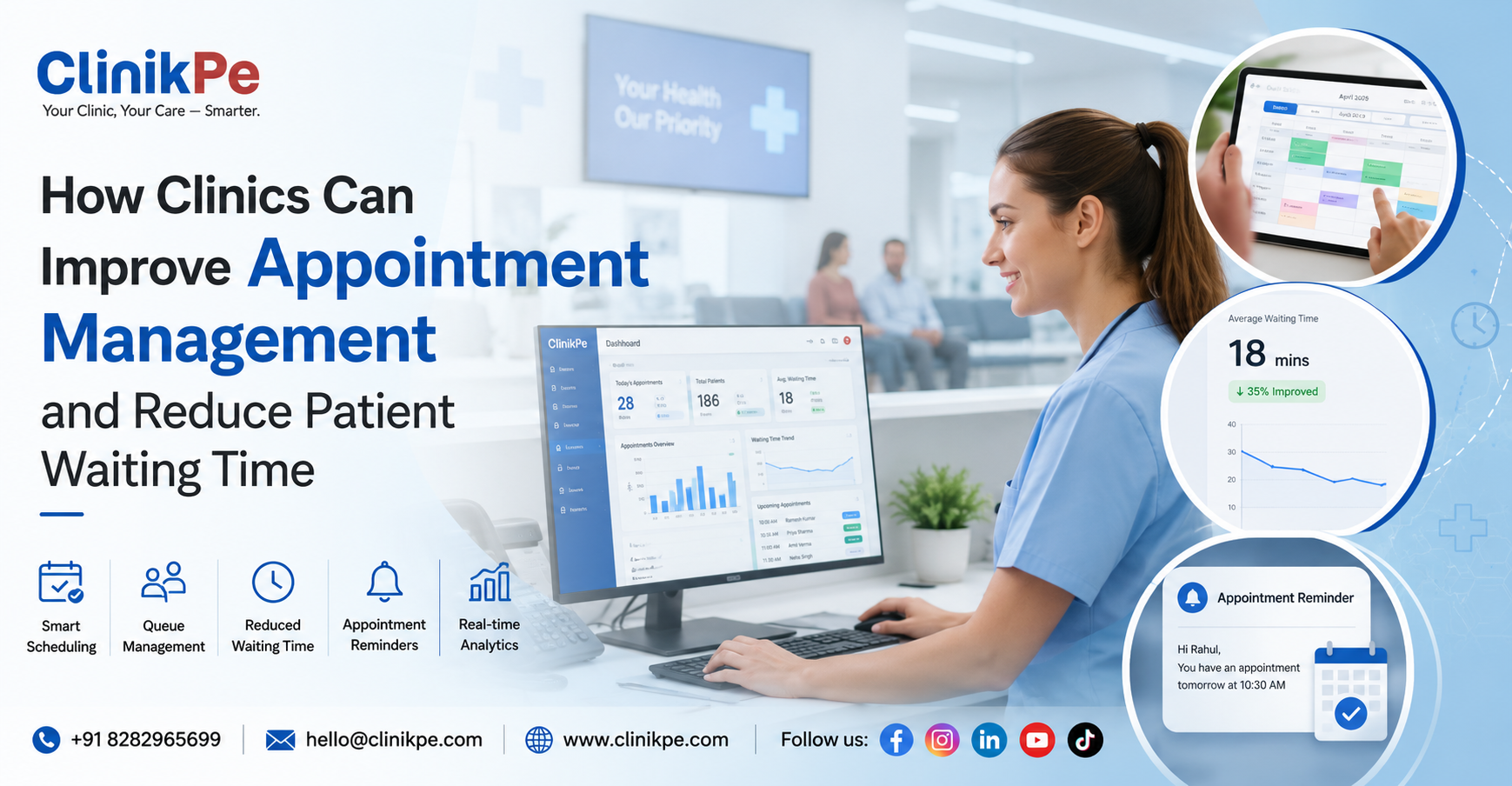
Appointment management plays a crucial role in the daily operations of clinics. Efficient appointment scheduling helps clinics maintain smooth workflows while ensuring that patients receive timely consultations.
In many clinics across India, appointments are still managed using manual registers, phone calls, or walk-in queues. While these methods may work for clinics with low patient volumes, they can create operational challenges as the number of patients increases.
Poor appointment management can lead to long waiting times, scheduling conflicts, and overcrowded waiting areas. Patients who experience repeated delays may become frustrated and choose other healthcare providers for future consultations.
Improving appointment management allows clinics to organize patient visits more efficiently while reducing administrative workload. By implementing structured scheduling practices and digital appointment systems, clinics can streamline patient flow and improve the overall patient experience.
The Problem Explained:
Manual appointment scheduling often involves recording patient bookings in notebooks or registers. While simple, these methods can create several operational challenges.
Common issues include:-
- Double-booked appointment slots
- Difficulty rescheduling appointments
- Long waiting times for patients
- Lack of visibility into daily patient schedules
- Difficulty tracking patient visit history
For example, if a clinic manages appointments through phone calls and manual registers, staff may accidentally book multiple patients for the same time slot. This can lead to overcrowded waiting areas and delayed consultations. These scheduling inefficiencies affect both clinic workflows and patient satisfaction.
Why This Happens in Indian Labs/Clinics:
Several factors contribute to appointment management challenges in clinics.
Manual scheduling systems
Many clinics still rely on paper registers or basic phone bookings to manage appointments.
Walk-in patient culture
Walk-in consultations remain common in many clinics, making scheduling more unpredictable.
Lack of centralized patient systems
Without digital systems, clinics may not have a clear overview of appointment schedules.
Increasing patient volumes
As clinics grow in popularity, managing appointments manually becomes increasingly difficult.
These operational challenges often lead to delays and scheduling conflicts.
Practical Solutions:
Clinics can improve appointment management by introducing structured scheduling practices.
1. Implement appointment time slots
Scheduling consultations in defined time slots helps clinics manage patient flow more efficiently.
2. Maintain centralized appointment records
Centralized scheduling systems allow staff to view all upcoming appointments in one place.
3. Offer advance appointment booking
Allowing patients to book appointments in advance reduces uncertainty and overcrowding.
4. Send appointment reminders
Reminders through SMS or phone calls help reduce missed appointments.
5. Monitor patient flow regularly
Tracking daily appointment volumes helps clinics adjust schedules and improve workflow efficiency.
Technology’s Role:
Digital clinic systems make appointment scheduling easier and more organized. A Clinic Management System can provide appointment management features such as:
- Digital appointment calendars
- Online appointment booking
- Automated patient reminders
- Patient visit history tracking
- Scheduling analytics
These tools help clinic staff manage appointments more efficiently while improving patient communication. Digital scheduling systems also allow clinics to monitor patient flow and reduce waiting time. You can [Explore our Clinic Management System] to understand how digital tools support appointment scheduling. You may also want to read [Manual vs Digital Clinic Management] to see how digital systems improve clinic operations.
Implementation Tips:
Clinics planning to improve appointment management can follow a structured approach.
Implementation Checklist
✔ Define consultation time slots
✔ Maintain centralized appointment schedules
✔ Offer advance appointment booking options
✔ Send appointment reminders to patients
✔ Track daily patient flow
✔ Train staff on appointment management processes
✔ Implement digital scheduling tools
These practices help clinics manage appointments more efficiently while improving patient experience. If you’re evaluating clinic software tools, you can also [View Clinic Software Pricing].
Final Takeaway
Efficient appointment management is essential for maintaining smooth clinic operations and improving patient satisfaction. Manual scheduling systems may work for smaller clinics, but they often become inefficient as patient volumes increase.
By implementing structured appointment scheduling and adopting digital management tools, clinics can reduce waiting times and improve patient flow. As healthcare services continue to modernize in India, digital appointment systems are becoming an important part of efficient clinic management.
Explore our Clinic Management System
FAQ Section
Appointment management helps clinics organize patient visits efficiently and reduce waiting time.
Common problems include double bookings, long waiting times, missed appointments, and scheduling conflicts.
Clinics can reduce waiting time by scheduling consultations in time slots and using digital appointment systems.
Yes. Clinic software allows clinics to manage schedules, send reminders, and track patient visits.
Many clinics now offer online appointment booking through clinic management systems.