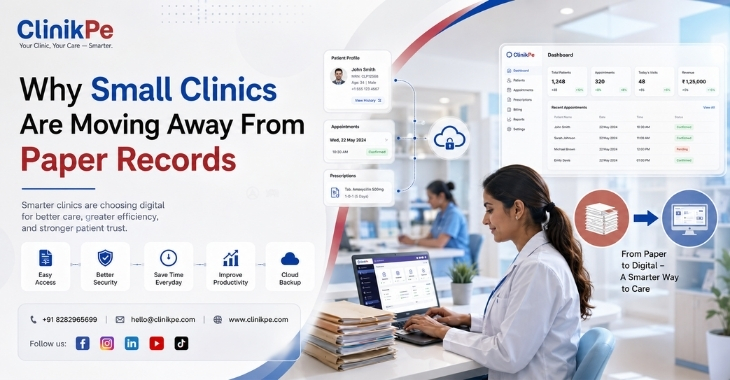
Healthcare is becoming increasingly digital, and small clinics are no exception. While paper records have been used for decades to manage patient information, appointments, prescriptions, and laboratory reports, they often create more challenges than convenience in today’s fast-paced healthcare environment.
Managing paper files takes time, consumes valuable storage space, increases the risk of misplaced documents, and makes retrieving patient information more difficult. As patient expectations continue to grow, clinics need faster, more organized, and more secure ways to manage healthcare operations.
That’s why many healthcare providers are replacing traditional paperwork with digital clinic management solutions. Modern software not only stores patient information securely but also integrates appointments, billing, prescriptions, laboratory workflows, and reporting into one centralized platform.
For clinics that provide diagnostic services, implementing a Laboratory Management System along with Lab Information Management Systems creates an even more efficient healthcare environment by simplifying laboratory operations and improving overall workflow.
If you’re managing a healthcare facility in West Bengal, India, moving from paper-based records to digital systems can significantly improve both operational efficiency and patient satisfaction.
Paper Records Slow Down Daily Operations
Paper-based systems require staff to manually organize, search, update, and store patient files. As the number of patients grows, locating historical records becomes increasingly time-consuming. Delays in retrieving information can affect appointment schedules, billing, and even clinical decision-making. Digital systems eliminate much of this manual work by making patient records instantly accessible.
Faster Access to Information
Healthcare providers can retrieve patient records within seconds instead of searching through physical files.
Better Organization
Digital databases organize patient information systematically, reducing administrative delays. Many clinics across West Bengal, India, are adopting digital systems to improve operational efficiency.
Improved Patient Record Management
Accurate patient information is essential for delivering quality healthcare. Paper records can become damaged, misplaced, or difficult to read over time. Updating handwritten records also increases the possibility of human error. Digital clinic management software stores patient histories, prescriptions, treatment records, and consultation details securely in one centralized platform.
Centralized Medical Records
Healthcare professionals can access complete patient histories whenever needed.
Better Accuracy
Digital recordkeeping reduces duplicate entries and minimizes documentation errors. This helps healthcare providers make more informed decisions during every patient visit.
Better Laboratory Workflow With Digital Systems
Laboratory operations generate large volumes of data every day. A Laboratory Management System helps clinics organize laboratory activities by managing sample tracking, report generation, workflow coordination, and data storage through one integrated platform. Instead of relying on manual paperwork, laboratories can process information more efficiently while improving accuracy.
Streamlined Laboratory Operations
Digital workflows reduce manual administrative tasks and improve laboratory productivity.
Faster Report Generation
Automated systems help laboratories deliver reports more efficiently while reducing paperwork. Clinics with diagnostic services often experience significant workflow improvements after implementing a Laboratory Management System.
Why Lab Information Management Systems Matter
As healthcare facilities expand, laboratory operations become more complex. Lab Information Management Systems help organize laboratory processes by connecting sample management, testing workflows, patient information, reporting, and laboratory records through one centralized system.
These systems improve communication between laboratory staff and healthcare providers while supporting better operational efficiency.
Improved Data Management
Laboratory information remains organized, secure, and easily accessible.
Better Coordination
Digital communication between departments reduces delays and improves workflow. Integrating Lab Information Management Systems with clinic management software creates a smoother healthcare experience for both staff and patients.
Enhanced Data Security and Compliance
Protecting patient information is a major responsibility for every healthcare provider. Paper records are vulnerable to loss, theft, fire, water damage, and unauthorized access. Digital healthcare systems offer stronger security through encrypted databases, role-based permissions, backups, and controlled access. These security measures help clinics better protect confidential patient information.
Secure Record Storage
Digital records remain protected while allowing authorized healthcare professionals to access necessary information.
Reduced Risk of Data Loss
Automatic backups help preserve important patient information even during unexpected situations. Modern healthcare technology supports both efficiency and patient privacy.
Lower Administrative Workload
One of the biggest reasons clinics move away from paper records is the reduction in repetitive administrative tasks. Instead of manually filing documents, updating paper charts, and organizing physical reports, staff can complete many routine activities digitally.
This saves valuable time while allowing healthcare professionals to focus more on patient care. At ClinikPe, healthcare providers receive integrated digital solutions that simplify patient management, laboratory operations, billing, appointments, and administrative workflows through one intelligent platform.
Preparing Clinics for Future Growth
As patient volumes increase, paper-based systems become more difficult to manage. Digital clinic management software provides a scalable solution that grows with your practice. Whether you’re expanding services, adding healthcare professionals, or increasing laboratory capacity, digital platforms make growth more organized and efficient.
Healthcare organizations investing in technology today are better prepared for tomorrow’s operational demands. By adopting a Laboratory Management System and Lab Information Management Systems, clinics position themselves for long-term success while improving patient care.
FAQ
A Laboratory Management System helps healthcare providers organize patient and laboratory data digitally, reducing paperwork, improving efficiency, and supporting faster clinical workflows.
Lab Information Management Systems are digital platforms that manage laboratory workflows, sample tracking, testing processes, patient reports, and laboratory records more efficiently.
Digital records allow healthcare professionals to access patient information quickly, reduce documentation errors, improve communication, and make faster clinical decisions.
Yes. Digital systems typically include encrypted storage, user access controls, backups, and security features that better protect confidential patient information.
Absolutely. Digital solutions reduce administrative work, improve organization, streamline appointments, and help small clinics operate more efficiently.
It automates laboratory workflows, organizes testing processes, improves report generation, and reduces manual paperwork for better efficiency.
Integration improves communication between laboratories and healthcare providers while creating a more connected and organized healthcare workflow.
Yes. Automation reduces repetitive tasks such as filing, scheduling, billing, record retrieval, and report management, allowing staff to focus more on patient care.
Yes. Modern healthcare platforms are scalable and can support expanding patient volumes, additional staff, and new clinical services.
ClinikPe offers a comprehensive healthcare platform with patient management, appointment scheduling, billing, Laboratory Management System capabilities, and Lab Information Management Systems integration to help clinics improve efficiency and deliver better patient care.
Final Thoughts
Paper records have served healthcare providers for many years, but modern clinics require faster, more secure, and more efficient ways to manage patient information and daily operations. Digital clinic management software, combined with a Laboratory Management System and Lab Information Management Systems, helps healthcare facilities improve workflow, strengthen data security, reduce administrative workload, and provide a better patient experience.
If you’re planning to modernize your healthcare practice in West Bengal, India, transitioning from paper records to digital healthcare management is an investment that supports both operational efficiency and future growth.
Modernize Your Clinic With ClinikPe
Ready to move beyond paper records? ClinikPe provides an all-in-one healthcare management platform designed to simplify patient management, appointments, billing, and laboratory operations. With advanced Laboratory Management System features and seamless Lab Information Management Systems integration, our solution helps clinics improve efficiency, enhance patient care, and prepare for future growth.