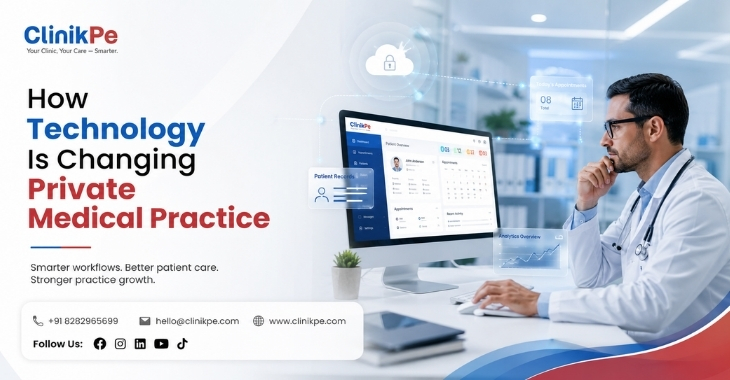
Technology has transformed nearly every industry, and healthcare is no exception. Private medical practices today are moving beyond paper files, manual scheduling, and disconnected systems in favor of intelligent digital solutions that simplify operations and improve patient care.
Modern healthcare technology helps doctors, clinic administrators, and laboratory professionals manage appointments, patient records, billing, prescriptions, inventory, and diagnostics more efficiently than ever before. Instead of spending valuable time on repetitive administrative tasks, healthcare professionals can focus on delivering high-quality care and building stronger patient relationships.
For practices that offer diagnostic services, integrating Laboratory Inventory Management with a Laboratory Information Management System further improves operational efficiency by streamlining laboratory workflows, managing inventory, and ensuring accurate reporting.
If you’re managing or planning to modernize a healthcare facility in West Bengal, India, understanding how technology is reshaping private medical practice can help you make informed decisions that support long-term growth and better patient outcomes.
Digital Patient Records Improve Efficiency
One of the biggest technological advancements in healthcare has been the transition from paper records to electronic patient records. Instead of searching through physical files, doctors and healthcare staff can instantly access patient histories, prescriptions, consultation notes, laboratory reports, and follow-up records through a centralized digital platform. This reduces administrative work while improving the quality and speed of patient care.
Faster Access to Medical Information
Digital records allow healthcare professionals to retrieve patient information within seconds.
Better Continuity of Care
Complete medical histories help doctors make informed clinical decisions during every visit. Healthcare providers throughout West Bengal, India are increasingly adopting digital record management to improve both efficiency and patient satisfaction.
Smarter Appointment Scheduling and Patient Management
Technology has significantly improved how clinics schedule and manage patient appointments. Modern clinic management software enables online appointment booking, automated reminders, digital registration, and organized scheduling, reducing missed appointments and improving patient flow. These tools also help administrative teams manage daily workloads more efficiently.
Simplified Appointment Booking
Patients can book appointments quickly without relying solely on phone calls.
Reduced Waiting Times
Better scheduling helps distribute patient visits more evenly throughout the day. Efficient patient management creates a smoother experience for both healthcare providers and patients.
Improved Laboratory Operations
Many private medical practices depend on diagnostic services for accurate patient evaluation. A Laboratory Information Management System helps healthcare facilities manage laboratory workflows digitally by organizing patient samples, test requests, report generation, and laboratory records. Instead of relying on manual documentation, laboratory teams work through automated workflows that improve accuracy and efficiency.
Streamlined Laboratory Processes
Digital systems reduce paperwork while improving coordination between doctors and laboratory professionals.
Faster Report Delivery
Automated workflows allow laboratory results to be processed and shared more efficiently. A Laboratory Information Management System strengthens communication between clinical and laboratory departments.
Better Control Through Laboratory Inventory Management
Maintaining sufficient laboratory supplies is essential for uninterrupted patient care. Laboratory Inventory Management enables healthcare providers to monitor laboratory reagents, diagnostic consumables, testing supplies, and equipment inventory in real time. Automated inventory tracking reduces the risk of stock shortages while helping clinics avoid unnecessary overstocking.
Real-Time Inventory Monitoring
Healthcare teams always know which laboratory supplies are available.
Smarter Purchasing Decisions
Inventory insights help clinics reduce waste while improving procurement planning. Effective Laboratory Inventory Management supports both operational efficiency and cost control.
Automation Reduces Administrative Work
Administrative responsibilities consume a significant amount of time in private medical practices. Tasks such as patient registration, billing, appointment scheduling, prescription management, and report filing become much easier through automation. By reducing repetitive manual work, clinics improve productivity while allowing staff to focus on patient support.
Less Paperwork
Digital systems simplify documentation and minimize manual data entry.
Higher Staff Productivity
Healthcare professionals spend more time caring for patients instead of completing administrative tasks. Automation helps create a more organized and efficient healthcare environment.
Better Communication Across Departments
Technology connects every part of a healthcare practice. Doctors, reception teams, laboratories, billing departments, and administrators can securely access updated patient information through one centralized system. This improves collaboration while reducing delays caused by manual communication.
Integrated healthcare software also helps eliminate duplicate data entry and ensures every department works with consistent information. At ClinikPe, healthcare providers benefit from an intelligent digital platform that connects appointments, patient records, billing, laboratories, and inventory management into one seamless solution designed for modern private practices.
Preparing Private Practices for the Future
Healthcare continues to evolve, and patient expectations continue to rise. Private medical practices that invest in digital technology are better positioned to deliver efficient, patient-centered care while supporting future growth.
Cloud-based software, automation, digital records, online scheduling, Laboratory Inventory Management, and Laboratory Information Management System integration all contribute to a smarter and more scalable healthcare environment. Technology is no longer simply a convenience—it has become an essential part of delivering high-quality healthcare services.
FAQ
Technology improves appointment scheduling, patient record management, billing, laboratory coordination, communication, and administrative efficiency through integrated digital healthcare solutions.
Laboratory Inventory Management helps clinics monitor laboratory supplies, prevent stock shortages, reduce waste, and maintain uninterrupted diagnostic services.
A Laboratory Information Management System is software that manages laboratory workflows, sample tracking, testing processes, patient reports, and laboratory records digitally.
Electronic records provide faster access to patient information, improve documentation accuracy, reduce paperwork, and support better clinical decision-making.
Yes. Integrated clinic management software allows doctors, laboratories, reception teams, and administrators to securely access updated information through one centralized platform.
Automation reduces repetitive administrative tasks, improves workflow efficiency, minimizes manual errors, and allows healthcare professionals to spend more time with patients.
Absolutely. Digital healthcare solutions are scalable and help clinics of all sizes improve efficiency, organization, and patient care.
Real-time inventory tracking helps clinics avoid unnecessary purchases, reduce expired supplies, and improve inventory planning.
Digital systems improve productivity, strengthen patient management, streamline laboratory operations, enhance security, and support future practice growth.
ClinikPe offers a comprehensive healthcare management platform with appointment scheduling, patient records, billing, Laboratory Inventory Management, and Laboratory Information Management System integration to help healthcare providers operate more efficiently while delivering exceptional patient care.
Final Thoughts
Technology is transforming private medical practices by simplifying administration, improving patient management, strengthening laboratory coordination, and enhancing operational efficiency. By adopting digital clinic management software with Laboratory Inventory Management and a Laboratory Information Management System, healthcare providers can reduce paperwork, improve communication, streamline laboratory operations, and deliver a better patient experience.
If you’re looking to modernize your healthcare practice in West Bengal, India, investing in integrated digital healthcare technology is an important step toward long-term success, improved productivity, and exceptional patient care.
Future-Proof Your Practice With ClinikPe
Ready to modernize your healthcare practice? ClinikPe provides an all-in-one clinic management platform that simplifies appointments, patient records, billing, and laboratory operations. With advanced Laboratory Inventory Management and seamless Laboratory Information Management System integration, our intelligent solution helps private practices improve efficiency, reduce administrative work, and deliver outstanding patient care.