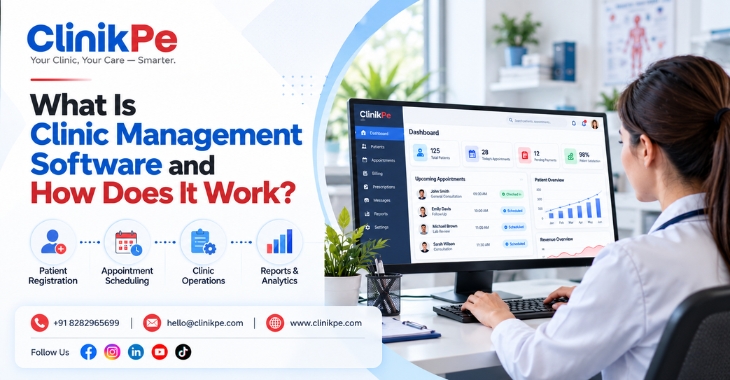
Running a healthcare facility involves much more than treating patients. Every day, clinics manage appointments, patient records, billing, prescriptions, laboratory reports, inventory, staff coordination, and regulatory compliance. Handling these tasks manually can be time-consuming, increase administrative workload, and lead to avoidable errors. This is where clinic management software becomes an essential part of modern healthcare.
Clinic management software helps automate routine administrative and clinical operations, allowing healthcare professionals to spend more time focusing on patient care rather than paperwork. From appointment scheduling to billing and laboratory management, a centralized digital platform streamlines everyday workflows and improves operational efficiency.
For clinics that also manage diagnostic services, integrating Laboratory Inventory Management and a Laboratory Information Management System provides even greater control over laboratory operations, inventory tracking, and patient reporting.
If you’re planning to modernize your healthcare practice in West Bengal, India, understanding how clinic management software works can help you choose the right solution for long-term growth and efficiency.
What Is Clinic Management Software?
Clinic management software is an integrated digital platform designed to simplify and automate the daily operations of clinics, healthcare centers, and diagnostic facilities.
Instead of managing multiple systems for appointments, billing, patient records, inventory, and laboratory reports, healthcare providers can access everything through one centralized dashboard. The software helps improve organization while reducing manual administrative work.
A Centralized Healthcare Platform
All essential clinic operations are managed through a single, secure system.
Improved Operational Efficiency
Automation reduces repetitive administrative tasks, allowing healthcare teams to focus more on patient care. Healthcare providers across West Bengal, India are increasingly adopting digital clinic management solutions to improve service quality and operational performance.
How Does Clinic Management Software Work?
Clinic management software connects multiple departments within a healthcare facility, allowing information to flow seamlessly between administrative staff, doctors, laboratory teams, pharmacists, and patients. Whenever patient information is entered into the system, it becomes available to authorized healthcare professionals, reducing duplicate data entry and improving coordination. The platform typically manages several core functions simultaneously.
Patient Registration and Electronic Records
Patient information is securely stored, making medical histories easy to access during future visits.
Appointment Scheduling
Online scheduling reduces missed appointments while improving patient convenience.
Billing and Payments
Automated billing minimizes errors and simplifies payment management. These integrated features improve workflow while creating a better experience for both patients and healthcare providers.
The Role of Laboratory Inventory Management
Laboratories rely on accurate inventory control to maintain uninterrupted diagnostic services. Laboratory Inventory Management helps healthcare facilities monitor medical supplies, diagnostic reagents, laboratory consumables, equipment usage, and stock availability in real time. Instead of manually tracking inventory, clinics can automate stock monitoring, receive low-stock alerts, and maintain accurate inventory records.
Better Stock Control
Automated inventory monitoring helps reduce shortages and unnecessary overstocking.
Improved Laboratory Efficiency
Real-time inventory visibility supports smoother laboratory operations and minimizes workflow interruptions. Effective Laboratory Inventory Management also helps reduce waste while improving purchasing decisions.
Why a Laboratory Information Management System Is Important
Modern diagnostic facilities generate large amounts of patient and laboratory data every day. A Laboratory Information Management System helps organize this information by managing laboratory workflows from sample collection to final report generation. Instead of relying on manual recordkeeping, laboratories can digitally manage testing processes, improve data accuracy, and speed up reporting.
Faster Report Management
Automated workflows help laboratories deliver reports more efficiently.
Better Data Accuracy
Digital record management reduces transcription errors while improving overall data consistency. Integrating a Laboratory Information Management System with clinic management software creates a seamless connection between clinical and laboratory operations.
Key Benefits of Clinic Management Software
Healthcare providers adopting digital clinic management solutions often experience improvements across multiple areas of their practice.
Some of the major advantages include:
- Faster patient registration.
- Simplified appointment scheduling.
- Centralized electronic medical records.
- Automated billing and payment tracking.
- Better communication between departments.
- Improved Laboratory Inventory Management.
- Enhanced laboratory workflow through a Laboratory Information Management System.
- Reduced paperwork.
- Greater operational efficiency.
- Improved patient satisfaction.
Together, these features help healthcare facilities provide more organized and efficient services.
Better Patient Experience
Shorter waiting times and faster administrative processes improve patient satisfaction.
Higher Staff Productivity
Automation allows healthcare professionals to spend less time on paperwork and more time caring for patients.
Choosing the Right Clinic Management Software
Not every software platform offers the same capabilities.
Before investing in a solution, healthcare providers should evaluate whether the software includes:
- Patient management.
- Appointment scheduling.
- Electronic medical records.
- Billing and invoicing.
- Pharmacy integration.
- Laboratory Inventory Management.
- Laboratory Information Management System integration.
- Reporting and analytics.
- Data security.
- Scalability for future growth.
Choosing a flexible platform ensures your clinic can continue growing without changing systems later. At ClinikPe, healthcare providers receive comprehensive digital solutions designed to simplify clinic operations while supporting efficient laboratory management and long-term practice growth.
The Future of Digital Healthcare Management
Healthcare continues to become more connected through digital technology. Modern clinic management software now integrates patient care, diagnostics, inventory, billing, reporting, and administrative operations into one intelligent platform.
As healthcare organizations continue adopting digital transformation, integrated systems will play an even greater role in improving efficiency, reducing operational costs, and enhancing patient care. Whether managing a small clinic or a growing healthcare network, investing in digital healthcare solutions helps create a stronger foundation for future success.
FAQ
Clinic management software is a digital platform that helps healthcare providers manage appointments, patient records, billing, reporting, inventory, and daily clinic operations from one centralized system.
Laboratory Inventory Management helps monitor laboratory supplies, diagnostic reagents, and equipment, reducing shortages, minimizing waste, and improving operational efficiency.
A Laboratory Information Management System is software that manages laboratory workflows, sample tracking, testing processes, report generation, and laboratory data in an organized digital environment.
Yes. Many modern platforms integrate directly with a Laboratory Information Management System, allowing seamless communication between clinical and laboratory departments.
It reduces administrative delays, improves appointment scheduling, provides faster access to patient records, and supports better coordination between healthcare professionals.
Yes. Many solutions are scalable and can support both small healthcare practices and large multi-specialty clinics.
By tracking inventory in real time, clinics can prevent unnecessary purchases, reduce expired stock, and improve procurement planning.
Look for secure data storage, role-based access, patient privacy protection, encrypted records, and regular data backups.
Yes. Most platforms provide operational reports, financial summaries, appointment statistics, inventory insights, and laboratory performance analytics.
ClinikPe offers a comprehensive healthcare management platform with patient management, billing, appointment scheduling, Laboratory Inventory Management, Laboratory Information Management System integration, and intelligent workflow automation to help healthcare providers operate more efficiently.
Final Thoughts
Clinic management software has transformed the way modern healthcare facilities operate by simplifying administrative processes, improving patient management, and enhancing collaboration across departments.
When combined with Laboratory Inventory Management and a Laboratory Information Management System, clinics gain better control over inventory, laboratory workflows, and patient reporting while reducing manual errors and improving operational efficiency. If you’re planning to modernize your healthcare facility in West Bengal, India, investing in an integrated clinic management solution can help improve productivity, patient satisfaction, and long-term business growth.
Upgrade Your Clinic with Smarter Healthcare Management
Looking to simplify your healthcare operations? ClinikPe offers an all-in-one clinic management solution with advanced patient management, billing, appointment scheduling, Laboratory Inventory Management, and Laboratory Information Management System capabilities. Whether you’re managing a clinic, diagnostic center, or healthcare facility, our intelligent platform helps improve efficiency, streamline workflows, and deliver better patient care.