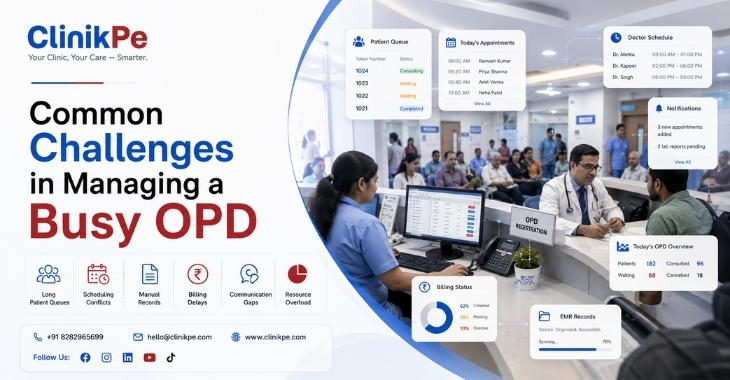
Outpatient Departments (OPDs) are often the busiest areas of any healthcare facility. Every day, doctors, nurses, administrative staff, and laboratory teams work together to manage patient registrations, consultations, prescriptions, diagnostic tests, billing, and follow-up appointments. As patient volumes continue to increase, managing these operations efficiently becomes more challenging.
Without the right systems in place, busy OPDs may experience longer waiting times, administrative delays, misplaced records, inventory shortages, and communication gaps between departments. These issues not only affect operational efficiency but can also impact the overall patient experience.
Modern healthcare technology helps solve many of these challenges. Integrated clinic management software, combined with Laboratory Inventory Management and a Laboratory Information Management System, streamlines workflows, improves coordination, and enables healthcare providers to focus more on patient care.
If you’re operating a healthcare facility in West Bengal, India, understanding the common challenges of OPD management can help you implement smarter solutions that improve efficiency and patient satisfaction.
Managing High Patient Volumes
One of the biggest challenges in any busy OPD is handling a large number of patients throughout the day. From patient registration to consultations and follow-up visits, every stage requires careful coordination. Manual systems often slow the process, resulting in long queues and increased waiting times. Digital clinic management software helps organize appointments and patient flow more effectively.
Faster Patient Registration
Electronic registration reduces paperwork and speeds up the check-in process.
Better Appointment Scheduling
Digital scheduling minimizes overcrowding and helps clinics manage patient flow more efficiently. Healthcare facilities across West Bengal, India are increasingly adopting digital systems to improve OPD operations.
Maintaining Accurate Patient Records
Patient information is essential for providing quality healthcare. When records are maintained manually, there is always a possibility of misplaced files, duplicate entries, or incomplete documentation. Retrieving older records also becomes time-consuming. Digital healthcare systems securely store patient histories, prescriptions, laboratory reports, and treatment records in one centralized location.
Quick Access to Medical History
Doctors can retrieve patient records within seconds during consultations.
Improved Documentation Accuracy
Digital systems reduce manual errors while keeping patient information organized and up to date. Better record management supports faster clinical decision-making.
Coordinating Laboratory Services
Many OPD patients require diagnostic tests before receiving treatment recommendations. Without integrated workflows, laboratory requests, sample tracking, and report sharing can become slow and inefficient. A Laboratory Information Management System connects laboratory operations with the clinic, allowing healthcare providers to access reports more efficiently.
Faster Laboratory Communication
Digital systems improve coordination between doctors and laboratory staff.
Efficient Report Management
Laboratory reports are generated, stored, and shared more quickly through integrated healthcare platforms. A Laboratory Information Management System helps reduce delays while improving workflow across departments.
Managing Laboratory Supplies and Inventory
Busy OPDs often rely on diagnostic laboratories that require continuous availability of testing materials and medical supplies. Without proper inventory tracking, clinics may experience shortages, overstocking, or expired consumables that interrupt patient care. Laboratory Inventory Management provides real-time visibility into laboratory stock levels, helping healthcare facilities maintain efficient inventory control.
Real-Time Inventory Tracking
Healthcare teams can monitor available supplies without relying on manual records.
Reduced Stock Shortages
Automated inventory monitoring helps ensure essential laboratory materials remain available when needed. Effective Laboratory Inventory Management supports uninterrupted diagnostic services.
Administrative Workload and Documentation
Administrative staff often spend considerable time managing paperwork, appointment logs, billing records, prescriptions, and patient files. These repetitive manual tasks reduce productivity and increase the possibility of documentation errors. Digital clinic management software automates many administrative processes, allowing healthcare teams to work more efficiently.
Reduced Paperwork
Automation minimizes repetitive manual documentation.
Improved Staff Productivity
Healthcare professionals can spend more time assisting patients instead of managing paperwork. Simplified administration benefits both staff members and patients.
Communication Between Departments
Busy healthcare facilities depend on smooth communication between reception staff, doctors, laboratories, pharmacists, and billing departments. Manual communication often causes delays, especially when patient information must be transferred between multiple departments.
Integrated healthcare management systems allow authorized staff to access updated information through one centralized platform. This improves coordination while reducing unnecessary delays throughout the patient’s visit. At ClinikPe, healthcare providers benefit from an integrated digital platform that connects appointments, patient records, billing, laboratory services, and inventory management into one streamlined workflow.
Improving the Overall Patient Experience
Patients expect efficient healthcare services with shorter waiting times and better communication. Digital healthcare systems improve patient experiences by simplifying appointments, reducing administrative delays, providing quicker access to medical records, and enabling faster laboratory reporting.
When clinics operate more efficiently, patients receive more personalized attention while spending less time waiting. Investing in technology helps create a smoother healthcare journey for everyone involved.
FAQ
Common challenges include high patient volumes, appointment scheduling, record management, laboratory coordination, inventory tracking, administrative workload, and communication between departments.
Laboratory Inventory Management helps monitor laboratory supplies, prevent stock shortages, reduce waste, and ensure uninterrupted diagnostic services.
A Laboratory Information Management System is software that manages laboratory workflows, sample tracking, testing processes, patient reports, and laboratory records digitally.
Digital systems automate appointments, patient registration, billing, documentation, and laboratory coordination, helping clinics reduce delays and improve workflow.
Yes. Modern healthcare platforms integrate laboratory management with patient records, billing, appointments, and clinical workflows to improve operational efficiency.
Doctors gain faster access to patient histories, laboratory reports, prescriptions, and consultation records, allowing more informed clinical decisions.
Real-time inventory tracking helps clinics avoid overstocking, prevent expired supplies, and improve purchasing decisions.
Efficient communication between doctors, laboratories, reception staff, and billing teams reduces delays and improves the patient experience.
Absolutely. Digital healthcare solutions improve organization, reduce paperwork, and enhance efficiency regardless of clinic size.
ClinikPe offers a complete healthcare management platform with appointment scheduling, patient management, billing, Laboratory Inventory Management, and Laboratory Information Management System integration to help clinics operate more efficiently and deliver better patient care.
Final Thoughts
Managing a busy OPD involves balancing patient care, administrative responsibilities, laboratory coordination, inventory management, and communication across multiple departments. Digital clinic management software, supported by Laboratory Inventory Management and a Laboratory Information Management System, helps healthcare providers overcome these operational challenges while improving efficiency, reducing paperwork, and delivering better patient experiences.
If you’re planning to modernize your healthcare practice in West Bengal, India, adopting an integrated digital solution can help your clinic manage growing patient volumes while preparing for future expansion.
Simplify OPD Management With ClinikPe
Looking to improve your clinic’s daily operations? ClinikPe offers a comprehensive healthcare management platform that streamlines appointments, patient records, billing, and laboratory workflows. With advanced Laboratory Inventory Management and seamless Laboratory Information Management System integration, our solution helps busy healthcare facilities operate more efficiently while delivering exceptional patient care.