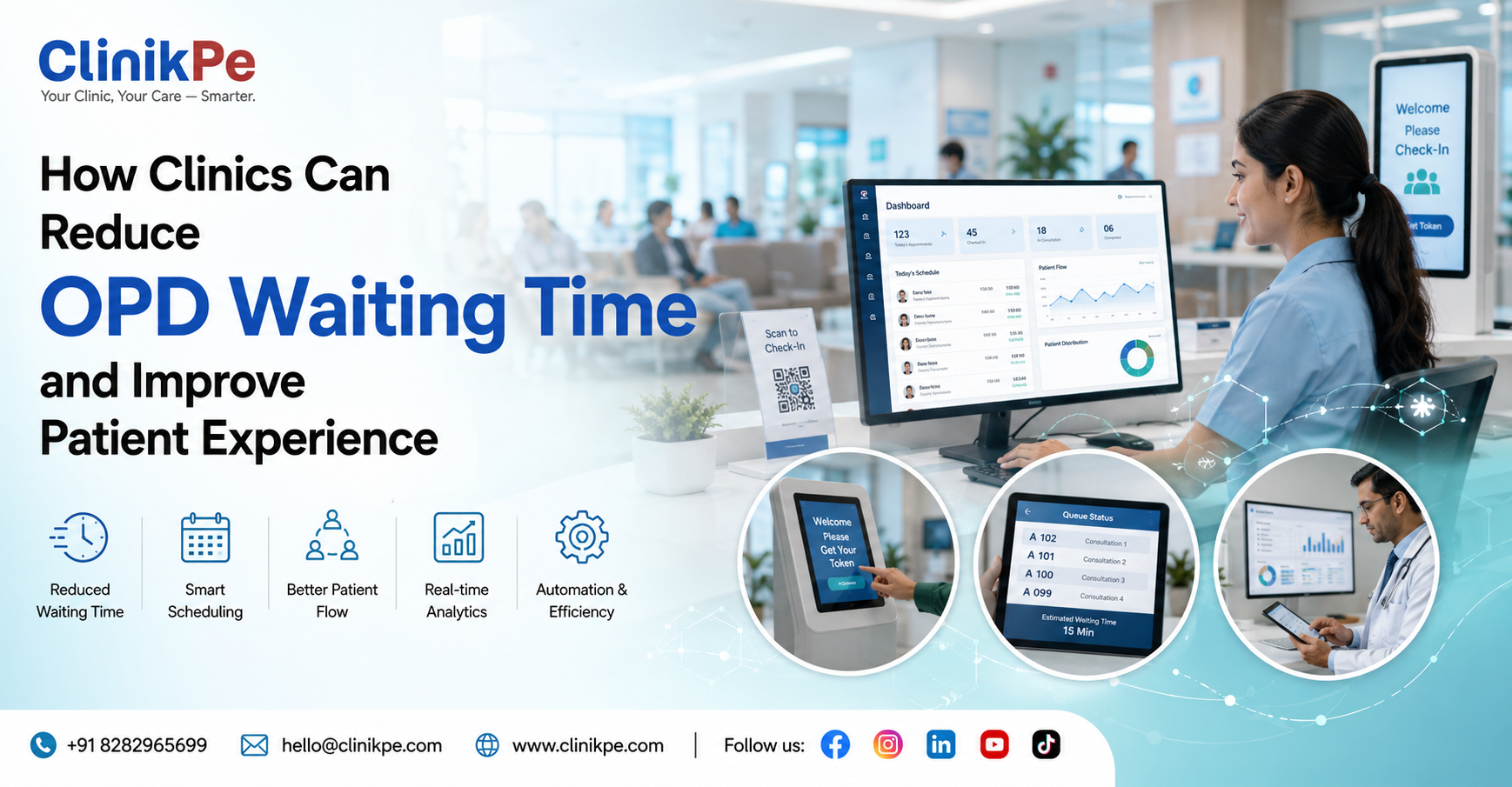
Long waiting times in outpatient departments (OPD) are a common concern for many clinics across India. Patients often visit clinics expecting timely consultations, but operational inefficiencies can lead to crowded waiting areas and delayed appointments.
In many clinics, patient visits are managed through manual registers, walk-in queues, and phone-based appointment bookings. While these methods may work in smaller setups, they often become difficult to manage as patient volumes increase.
When clinics struggle to manage patient flow efficiently, it can lead to longer waiting times, frustrated patients, and increased workload for clinic staff. Reducing OPD waiting time is not only important for improving patient satisfaction but also for maintaining smooth clinic operations.
By optimizing appointment scheduling, streamlining front desk workflows, and adopting digital clinic management systems, clinics can manage patient visits more efficiently and provide a better overall experience.
The Problem Explained:
OPD waiting time refers to the period patients spend waiting between arrival at the clinic and their consultation with the doctor. Several operational factors can increase waiting times.
Common causes include:-
- Overcrowded appointment schedules
- Walk-in patients disrupting planned schedules
- Slow patient registration processes
- Difficulty retrieving patient records
- delays between consultations
For example, if clinic staff must manually search through patient files or registers to locate records, the consultation process may slow down.
Similarly, if multiple patients arrive at the same time due to poor scheduling, waiting areas can become crowded, and consultations may run behind schedule. These operational inefficiencies affect both clinic workflows and patient satisfaction.
Why This Happens in Indian Labs/Clinics:
Several operational factors contribute to longer OPD waiting times in clinics.
Walk-in patient culture
Many clinics allow walk-in consultations without structured scheduling systems.
Manual patient registration
Paper-based patient registration can slow down the front desk process.
Lack of appointment management systems
Without digital scheduling tools, clinics may struggle to manage consultation slots efficiently.
Increasing patient demand
As clinics gain popularity, patient volumes increase, and manual workflows may become difficult to manage.
These challenges make it harder for clinics to maintain consistent consultation schedules.
Practical Solutions:
Clinics can reduce OPD waiting time by improving operational workflows and scheduling systems.
1. Introduce structured appointment scheduling
Scheduling consultations in fixed time slots helps clinics manage patient flow more efficiently.
2. Digitize patient registration
Digital registration systems allow staff to record patient details quickly and retrieve records instantly.
3. Separate walk-in and scheduled patients
Maintaining separate queues for walk-in patients can prevent disruption to scheduled appointments.
4. Monitor consultation duration
Tracking average consultation time helps clinics plan more realistic appointment schedules.
5. Communicate appointment schedules clearly
Informing patients about expected consultation times helps reduce crowding during peak hours.
Technology’s Role:
Digital clinic management systems help clinics manage patient flow more efficiently by automating several administrative processes.
A Clinic Management System can provide features such as:
- Digital patient registration
- Appointment scheduling systems
- Automated patient reminders
- Patient history retrieval
- Consultation scheduling analytics
These tools allow clinics to organize patient visits more effectively and reduce waiting time. Digital systems also help clinic staff quickly retrieve patient records, reducing delays during consultations. You can [Explore our Clinic Management System] to understand how digital tools improve clinic workflows. You may also want to read [How to Improve Appointment Management in Clinics] to see how structured scheduling helps reduce waiting times.
Implementation Tips:
Clinics can improve OPD workflow by following a structured approach.
Implementation Checklist
✔ Define consultation time slots
✔ Digitize patient registration processes
✔ Separate walk-in and scheduled patient queues
✔ Monitor average consultation time
✔ Send appointment reminders to patients
✔ Train staff on efficient front desk workflows
✔ Implement digital clinic management systems
These improvements help clinics manage patient flow more efficiently while improving patient satisfaction. If you’re evaluating clinic software tools, you can also [View Clinic Software Pricing].
Final Takeaway
Reducing OPD waiting time is essential for improving both clinic efficiency and patient experience. Manual workflows and unstructured appointment systems often lead to delays and overcrowded waiting areas. By implementing structured appointment scheduling, digitizing patient registration, and adopting digital clinic management systems, clinics can significantly improve patient flow.
Efficient OPD management allows clinics to provide faster consultations while maintaining a more organized and comfortable patient environment.
Explore our Clinic Management System
FAQ Section
OPD waiting time refers to the time patients spend waiting between arriving at the clinic and seeing the doctor.
Common reasons include poor appointment scheduling, manual registration systems, and high patient volumes.
Clinics can reduce waiting time by improving appointment management, digitizing patient registration, and organizing patient flow.
Yes. Digital clinic systems streamline registration, scheduling, and patient record retrieval.
Many clinics allow walk-ins, but separating walk-in and scheduled patients helps maintain better appointment schedules.