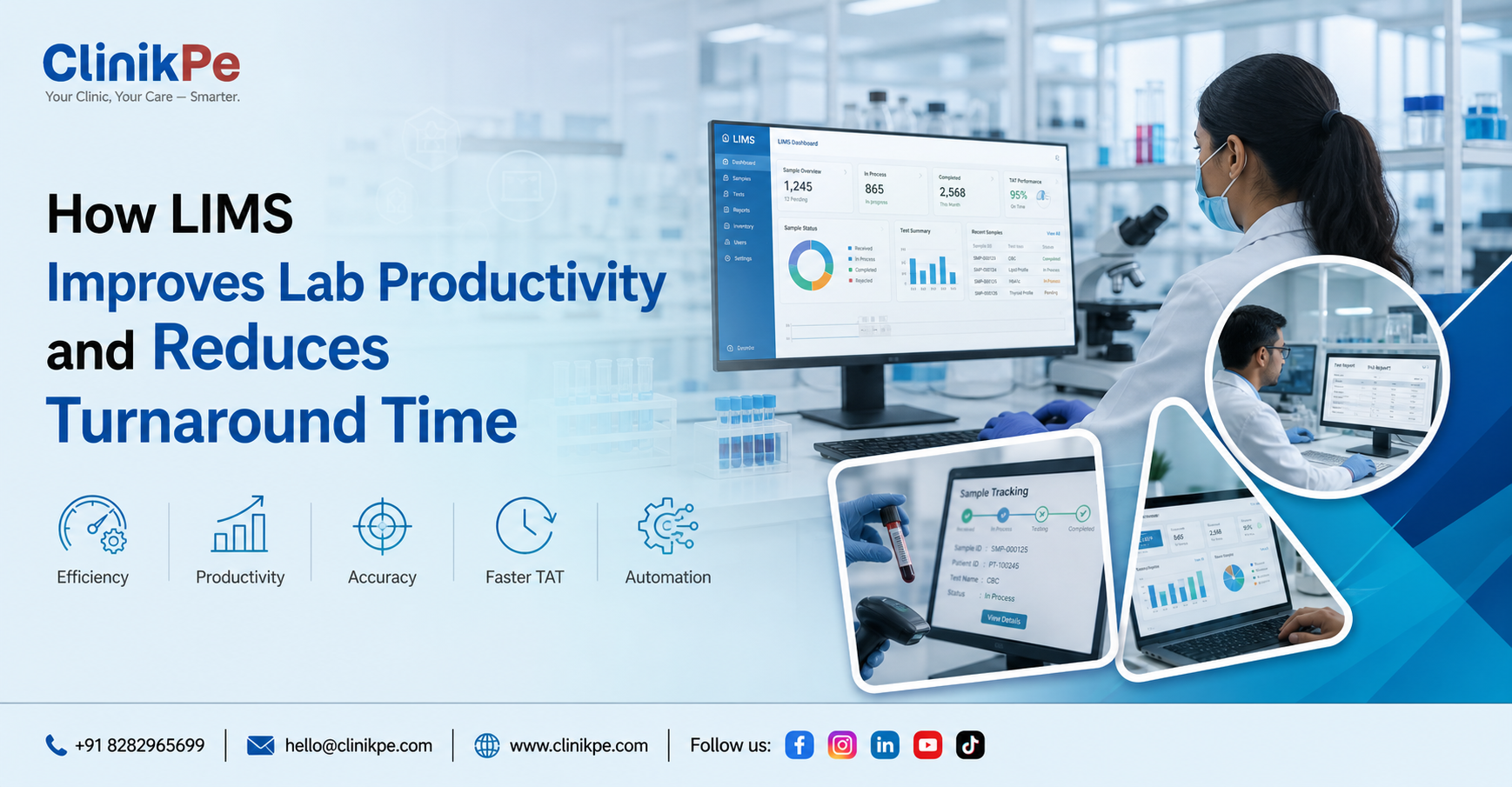
Let’s be honest — running a lab isn’t easy. You handle many samples daily, manage a busy team, and meet patient expectations. Even a small delay can disrupt everything. That’s where a Laboratory Information Management System (LIMS) helps. It brings structure, connects people and processes, and keeps your lab running smoothly and efficiently.
In this blog, we’ll walk you through exactly how LIMS helps labs work better and deliver results more quickly.
1. No More Manual Data Entry Errors
2. Faster Sample Tracking from Start to Finish
3. Smarter Workflow Management
4. Quicker and More Accurate Reporting
5. Better Inventory Control — No More Running Out
6. Integrated Billing Saves Time and Reduces Confusion
7. Multi-Location Management Without the Headache
8. Quality Control That Actually Works
1. No More Manual Data Entry Errors:
Think about how much time your team spends writing sample details, entering results, and updating records. Small errors often slip in — a wrong ID or a missed entry.
LIMS removes most of this manual work. Each sample gets a unique barcode that stays with it from collection to reporting. Your team doesn’t need to re-enter the same data over and over. The system handles it smoothly.
This saves time and reduces mistakes. Fewer errors mean faster reports and better patient care. It also builds trust and improves your lab’s overall reputation.
2. Faster Sample Tracking from Start to Finish:
One of the biggest reasons for delays in any lab is losing track of a sample. Is it still in the collection? Has it reached the analyzer? Has it been tested? Without a proper system, answering these questions wastes time.
Lab Information Management Systems give you real-time visibility into every sample’s status. You know exactly where each sample is at any moment. No more running around or guessing.
a. Real-Time Status Updates
Every time a sample moves, the system updates its status instantly. The front desk, lab staff, and doctors can check progress without calls. This keeps everyone aligned and saves time.
b. Fewer Delays at Critical Stages
With clear visibility, it becomes easy to spot slow points. If samples pile up or tests take longer, LIMS highlights it early so your team can act fast.
3. Smarter Workflow Management:
Every lab has a workflow — a specific way tests get assigned, processed, and completed. But when that workflow depends on paper slips, phone calls, or memory, things fall through the cracks.
LIMS organizes your entire workflow digitally. Tests are automatically assigned based on the rules you set. Technicians receive clear task lists. Priority samples get flagged right away. There’s no confusion about who does what and when.
This kind of organized workflow means your team works faster, not harder. They spend less time figuring out what to do next and more time actually doing it.
4. Quicker and More Accurate Reporting:
Patients and doctors expect reports quickly. Delays can create stress, slow treatment decisions, and impact your lab’s reputation.
With a Laboratory Information Management System, reports are generated automatically once results are ready. They are shared via WhatsApp, email, or patient portals without manual effort. Digital signatures, NABL-compliant formats, and verified data are all handled within the system.
a. Automated Report Delivery
As soon as a report is ready, it gets sent instantly. There is no need to wait for someone to print it or inform patients. This saves time and improves turnaround.
b. Reduced Re-Testing Due to Errors
When results come directly from analyzers and go through proper checks, errors are reduced. Fewer incorrect reports mean less re-testing, saving time and resources while maintaining patient trust.
5. Better Inventory Control — No More Running Out:
Imagine being in the middle of a busy day and suddenly realizing you’ve run out of a key reagent. Work stops. Tests get delayed. Patients wait. It’s a situation every lab manager dreads — and it’s surprisingly common when stock is tracked manually.
LIMS keeps a close eye on your inventory in real time. It tracks reagents, consumables, and supplies as they get used. When stock drops to a certain level, the system automatically sends a reorder alert. No more last-minute panic buying or overstocking things you don’t need.
You always have what you need, when you need it — and that directly supports faster testing and smoother operations.
6. Integrated Billing Saves Time and Reduces Confusion:
Billing is one area where labs often face unnecessary delays and disputes. If billing is handled separately from the lab system, information has to be entered multiple times — and that’s where errors and gaps happen.
When billing is connected directly to your LIMS, every test gets billed automatically as soon as it’s ordered. Payments get tracked. Outstanding amounts show up clearly. There’s no confusion about what was billed, what was paid, and what’s pending.
This integration speeds up the entire front-end process and helps labs maintain a healthier cash flow, which is just as important as any other part of running a good lab.
7. Multi-Location Management Without the Headache:
If you run more than one lab or collection center, coordination between them is a real challenge. Data gets scattered. Reports don’t match up. Staff in one location don’t know what’s happening in another.
LIMS brings everything together under one roof — digitally. All your locations share the same platform. Data syncs in real time. You can pull consolidated reports for all branches at once. Management becomes far less complicated.
Whether you have two centers or twenty, you always have a clear view of what’s happening everywhere — and that clarity directly improves efficiency across the board.
8. Quality Control That Actually Works:
Quality control in a lab isn’t just a checkbox. It determines whether your results can be trusted. Manual QC processes are often inconsistent — different people follow different steps, and monitoring trends over time is nearly impossible without proper data.
LIMS automates QC protocols. It runs checks, tracks trends, and flags results that fall outside acceptable ranges before they reach the patient. This means fewer errors slip through, fewer reports need correction, and your lab maintains a consistent standard every single day.
When your quality is reliable, your turnaround time improves too — because you’re not spending time fixing mistakes after the fact.
ClinikPe LIMS — Built for Indian Diagnostic Labs:
Now that we’ve seen how LIMS improves lab operations, it’s worth looking at a solution made for India — ClinikPe LIMS. It goes beyond sample tracking and brings together billing, inventory, quality control, and multi-location management into a single, simple cloud platform designed for Indian labs.
Here’s what ClinikPe LIMS offers:-
Sample Tracking — End-to-end barcode tracking with real-time updates, so you always know sample status.
Quality Control — Automated QC with trend monitoring to ensure accurate and reliable results.
Digital Reporting — NABL-compliant reports with digital signatures, shared instantly via WhatsApp and email.
Inventory Management — Real-time stock tracking with alerts and built-in vendor management.
Analytics Dashboard — Clear insights into KPIs, revenue, and performance for better decisions.
Multi-Location Support — Easily manage multiple branches with centralized data and reporting.
ClinikPe LIMS helps labs reduce delays, improve accuracy, and run more smoothly every day.
Before We Wrap Up — Some Questions Labs Often Ask:
You’ve explored LIMS benefits; now let’s answer common questions about adopting it.
No, LIMS works for labs of all sizes. Small labs can start simple and scale as they grow.
It depends, but cloud-based systems like ClinikPe can be set up within a few days.
Not really. Most LIMS platforms are user-friendly, and staff can learn them quickly with basic training.
Yes, it connects easily with analyzers, billing software, and other lab systems.
Yes, data stays secure with encryption, controlled access, and automatic backups.
Labs see faster turnaround, fewer errors, smoother workflows, and better overall efficiency.
Wrapping It Up
Labs need speed without losing accuracy. A Laboratory Information Management System helps manage samples, reports, and daily tasks with ease. It reduces delays and improves workflow.
For Indian labs, ClinikPe LIMS fits real needs. It brings everything into one simple platform. Want smoother operations every day? Get started with ClinikPe today.