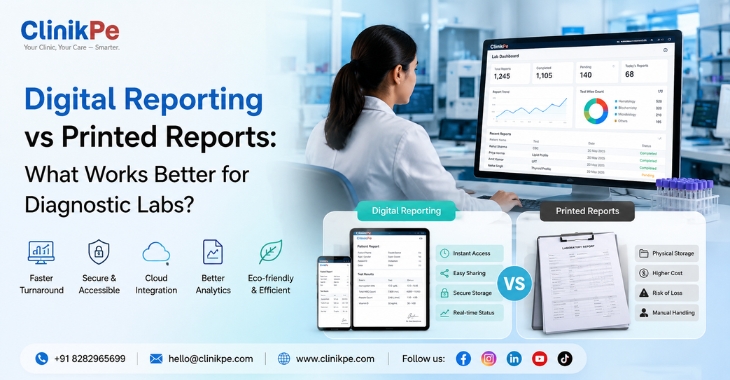
Diagnostic labs have traditionally relied on printed reports as the primary method of delivering test results to patients and referring doctors. For many years, patients would visit the lab again to collect their physical report after testing was completed.
However, the rapid adoption of digital systems in healthcare has changed how diagnostic reports are delivered. Today, many labs provide digital reports that patients can access through email, SMS links, or online portals. While printed reports still remain common in many diagnostic labs across India, digital reporting is gradually becoming the preferred approach due to its convenience and efficiency.
Manual report printing and distribution can consume time and administrative effort. Patients may also find it inconvenient to revisit the lab only to collect their reports. Digital reporting allows labs to deliver reports instantly once results are validated, improving both operational efficiency and patient experience.
Understanding the advantages and limitations of digital and printed reporting can help labs choose the right approach for their operations.
The Problem Explained:
Printed reports require several operational steps before they reach the patient.
Typical steps include:-
- Preparing the report template
- Printing the report
- Verifying the printed document
- Handing the report to the patient or clinic
These steps can slow down report delivery, especially during high testing volumes.
Common challenges associated with printed reports include:-
- Delays in report collection
- Administrative workload for printing and distribution
- Risk of misplaced physical reports
- Storage challenges for maintaining printed records
- Limited accessibility for patients
For example, patients who live far from the lab may need to travel again just to collect their reports. This inconvenience can affect patient satisfaction.
Why This Happens in Indian Labs/Clinics:
Despite the growth of digital systems, printed reports are still widely used in many labs. Several factors contribute to this.
Traditional reporting practices
Many labs have historically relied on printed reports and continue using these systems.
Limited digital infrastructure
Labs without digital reporting platforms may find it difficult to provide reports online.
Patient preferences
Some patients still prefer printed reports for personal record keeping.
Doctor requirements
Certain clinics and hospitals may request printed reports for documentation purposes.
Because of these factors, many labs currently use a hybrid approach that includes both digital and printed reporting.
Practical Solutions:
Labs can improve reporting efficiency by gradually adopting digital reporting practices.
1. Provide digital report access
Labs can send reports to patients through email or secure download links.
2. Maintain digital patient records
Digital record systems allow labs to store reports securely and retrieve them easily when needed.
3. Offer optional printed reports
Labs can provide printed reports for patients who prefer physical copies.
4. Reduce manual report handling
Digital systems automate report generation and reduce administrative workload.
5. Improve patient communication
Labs can notify patients when reports are ready for download, improving transparency.
Technology’s Role:
Digital lab systems allow labs to generate and distribute reports electronically.
A Lab Management System (LIMS) typically supports digital reporting through features such as:
- Automated report generation
- Digital report storage
- Email and SMS report delivery
- Secure patient access portals
- Centralized report databases
These capabilities allow labs to deliver reports faster while reducing administrative workload. Digital systems also allow referring doctors to access reports quickly without waiting for printed copies.
You can [Explore our Lab Management System] to understand how digital reporting works within lab workflows. You may also want to read [How to Reduce Report Turnaround Time in Labs] to see how digital systems help speed up reporting processes.
Implementation Tips:
Labs transitioning to digital reporting should implement changes gradually.
Implementation Checklist:-
✔ Maintain digital report templates
✔ Enable email or SMS report delivery
✔ Store reports securely in centralized databases
✔ Train staff on digital reporting workflows
✔ Continue offering printed reports where necessary
✔ Ensure patient data privacy and security
✔ Monitor patient feedback on reporting systems
These practices help labs improve reporting efficiency while maintaining flexibility. If you’re evaluating digital lab tools, you can also [View Lab Management System Pricing].
Final Takeaway
Both digital and printed reports continue to play roles in diagnostic lab operations. However, digital reporting offers several advantages in terms of speed, accessibility, and operational efficiency.
By adopting digital reporting systems while still offering printed options where required, labs can improve patient convenience and streamline internal workflows. As diagnostic services continue to expand across India, digital reporting is becoming an increasingly important part of modern lab operations.
Explore our Lab Management System
FAQ Section
Digital reporting allows labs to deliver test results electronically through email, SMS links, or patient portals.
Yes. Many labs continue to provide printed reports, especially for patients or clinics that prefer physical copies.
Digital reporting reduces printing tasks, speeds up report delivery, and improves accessibility for patients and doctors.
Yes. Secure digital systems use encryption and access controls to protect patient information.
Yes. Many labs use a hybrid approach where patients can access digital reports while still requesting printed copies if needed.