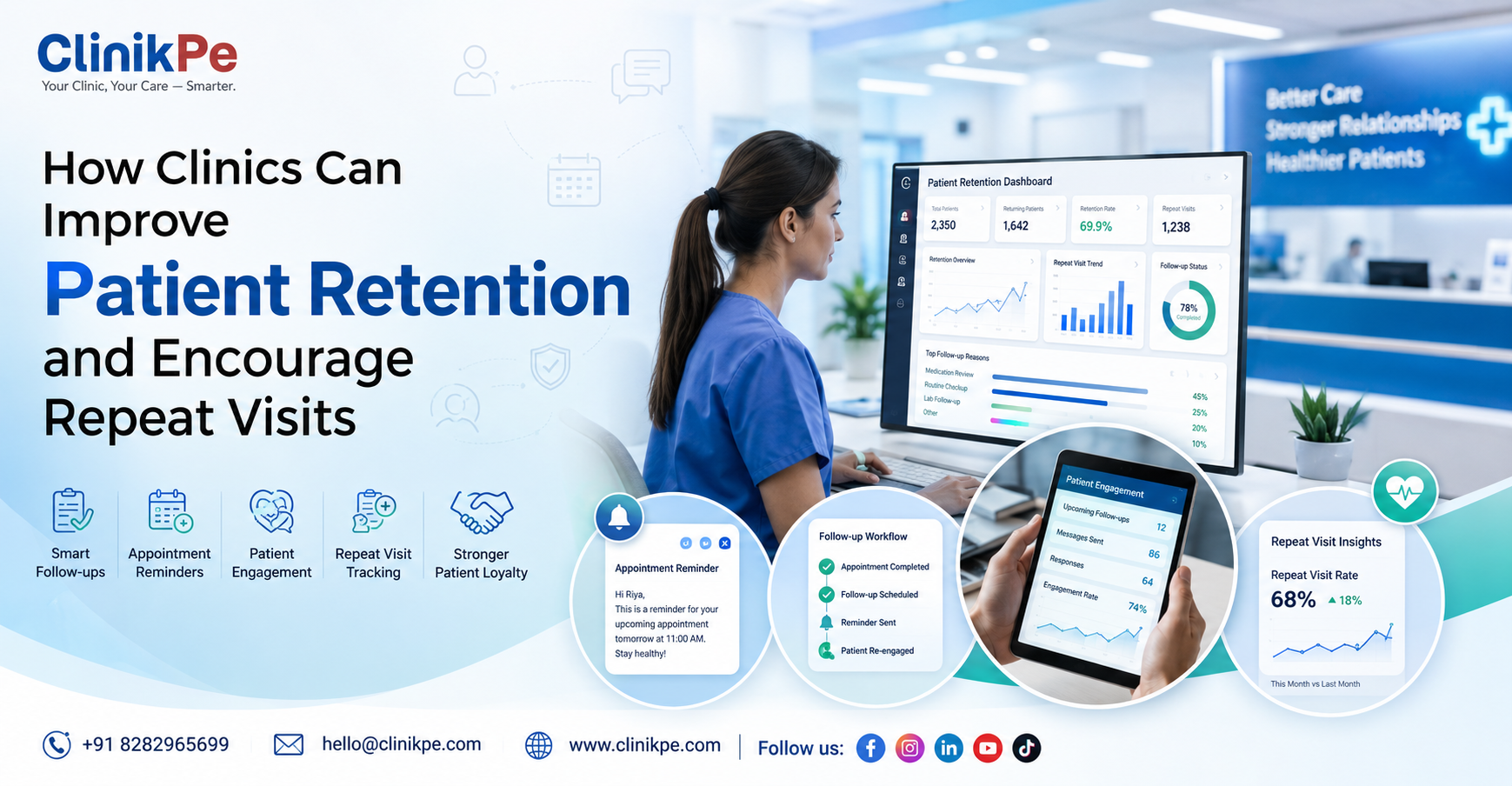
For many clinics in India, attracting new patients often requires continuous marketing efforts and strong local visibility. However, one of the most important drivers of long-term clinic growth is patient retention. Patients who trust a clinic are more likely to return for follow-up consultations, routine health checkups, and ongoing treatments. Repeat patients also contribute to positive word-of-mouth referrals within the local community.
Despite this, many clinics focus primarily on acquiring new patients while paying less attention to maintaining relationships with existing ones. Common issues such as long waiting times, difficulty accessing medical records, and poor communication can discourage patients from returning to the same clinic.
Improving patient retention requires clinics to focus on consistent service quality, convenient patient access, and efficient workflows. When clinics provide reliable consultations, maintain organized patient records, and communicate clearly with patients, they can build stronger relationships and encourage repeat visits.
The Problem Explained:
Patient retention problems usually arise when the patient experience is inconsistent.
Common factors that reduce repeat visits include:-
- long waiting times during consultations
- difficulty retrieving previous medical records
- Poor appointment scheduling
- lack of communication about follow-up visits
- inconsistent service quality
For example, if a patient needs to repeat their medical history during every visit because records are not available, it can create frustration. Similarly, when clinics do not maintain structured appointment schedules, patients may experience long waiting times and choose other clinics for future consultations. These operational issues can gradually reduce patient loyalty.
Why This Happens in Indian Labs/Clinics:
Several operational factors contribute to low patient retention in clinics.
Manual record systems
Paper-based patient files can make it difficult to retrieve medical history quickly.
Limited follow-up communication
Many clinics do not maintain structured communication with patients after consultations.
Inefficient appointment systems
Poor scheduling systems often lead to longer waiting times.
Lack of patient convenience
Patients today expect faster service and easy access to medical records. Clinics that do not provide convenient services may struggle to maintain repeat visits.
Practical Solutions:
Clinics can improve patient retention by focusing on patient experience and operational efficiency.
1. Maintain organized patient records
Centralized patient records allow doctors to review medical history quickly during consultations.
2. Improve appointment scheduling
Efficient appointment systems help reduce waiting time and improve patient satisfaction.
3. Communicate follow-up reminders
Sending reminders for follow-up visits helps maintain patient engagement.
4. Provide digital access to prescriptions and records
Allowing patients to access prescriptions and reports digitally improves convenience.
5. Maintain consistent service quality
Patients are more likely to return when they experience reliable and professional healthcare services.
Technology’s Role:
Digital clinic management systems help clinics maintain organized patient records and improve communication with patients.
A Clinic Management System can support patient retention through features such as:
- centralized patient records
- digital prescriptions
- appointment scheduling
- automated patient reminders
- consultation history tracking
These tools allow clinics to deliver more personalized care while maintaining efficient workflows. Digital systems also help clinics maintain consistent documentation for returning patients. You can [Explore our Clinic Management System] to understand how digital tools support patient management. You may also want to read [How Clinics Can Reduce OPD Waiting Time] to see how improved workflows enhance patient experience.
Implementation Tips:
Clinics can improve patient retention by implementing structured operational practices.
Implementation Checklist
✔ Maintain centralized patient records
✔ Improve appointment scheduling systems
✔ Send reminders for follow-up consultations
✔ Provide digital prescriptions and patient documents
✔ Train staff to maintain consistent patient service
✔ Monitor patient feedback regularly
✔ Implement digital clinic management systems
These steps help clinics build stronger long-term relationships with patients. If you’re evaluating clinic management tools, you can also [View Clinic Software Pricing].
Final Takeaway
Patient retention is essential for long-term clinic growth. Clinics that maintain strong relationships with patients are more likely to see repeat visits and referrals from satisfied patients.
Improving patient experience through better scheduling, organized medical records, and consistent communication can significantly increase patient loyalty. Digital clinic management systems help clinics maintain structured workflows and improve patient engagement. By focusing on patient convenience and service quality, clinics can build lasting trust and encourage repeat visits.
Explore our Clinic Management System
FAQ Section
Patient retention helps clinics maintain consistent consultation volumes and build long-term relationships with patients.
Common reasons include long waiting times, poor communication, and difficulty accessing medical records.
Clinics can encourage repeat visits by improving patient experience, maintaining organized records, and sending follow-up reminders.
Yes. Clinic software helps maintain patient history, automate reminders, and streamline appointment scheduling.
Factors include reliable consultations, organized medical records, efficient service, and clear communication.