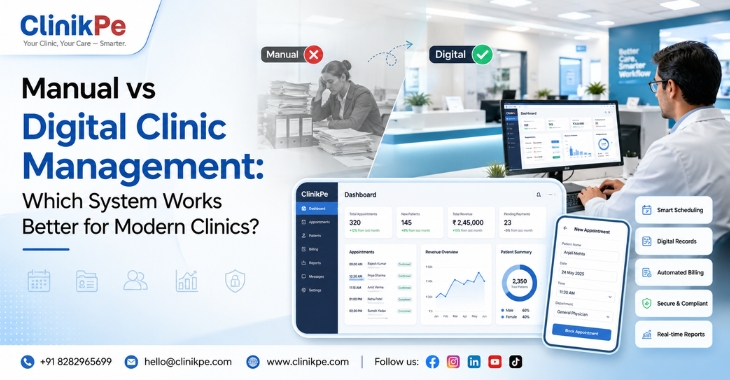
Many clinics in India still rely on manual systems such as paper registers, appointment notebooks, and handwritten prescriptions to manage their daily operations. These systems have been used for decades and remain common in small clinics and newly established practices.
However, as patient volumes increase, manual clinic management can create operational challenges. Front desk staff may spend significant time maintaining patient registers, searching for past records, and managing appointment schedules.
These administrative tasks can slow down clinic workflows and increase waiting time for patients. Digital clinic management systems are designed to streamline these processes by centralizing patient records, automating appointments, and simplifying billing and documentation.
While manual systems may appear simple initially, digital systems offer several operational advantages for clinics that want to improve efficiency and patient experience. Understanding the differences between manual and digital clinic management helps clinic owners evaluate which system best supports long-term clinic operations.
The Problem Explained:
Manual clinic management typically involves handling administrative tasks using paper-based tools such as:-
- patient registration registers
- handwritten appointment books
- manual billing records
- physical patient files
While these methods can work for clinics with low patient volumes, they often become difficult to manage as the number of patients increases.
Common operational issues include:-
- difficulty retrieving patient records
- appointment scheduling conflicts
- longer patient waiting times
- manual billing errors
- limited visibility into clinic operations
For example, when a returning patient visits the clinic, staff may need to search through multiple registers or files to locate previous records. These delays can slow down the consultation process and affect patient satisfaction.
Why This Happens in Indian Labs/Clinics:
Several factors contribute to the continued use of manual clinic management systems.
Traditional workflow habits
Many clinics have used manual systems for years and are comfortable with these methods.
Low initial setup cost
Manual systems do not require software investments, making them attractive for small clinics.
Limited awareness of digital tools
Some clinic owners are not fully aware of how clinic management software can simplify administrative workflows.
Gradual increase in patient volume
Clinics often begin with low patient numbers, but as reputation grows, patient visits increase rapidly. Manual systems may struggle to keep up with this growth.
Practical Solutions:
Clinics can improve operational efficiency by gradually adopting digital workflows.
1. Digitize patient records
Digital systems store patient information in a centralized database, making records easy to retrieve.
2. Implement digital appointment scheduling
Appointment management systems help clinics manage patient flow and reduce waiting time.
3. Automate billing processes
Digital billing systems reduce manual errors and simplify payment tracking.
4. Maintain digital prescriptions
Electronic prescriptions improve documentation and allow clinics to maintain patient history.
5. Monitor clinic operations
Digital systems allow clinic managers to monitor patient volume, appointment schedules, and operational performance.
Technology’s Role:
Digital clinic systems help automate administrative workflows and improve patient management.
A Clinic Management System typically includes features such as:
- patient registration
- appointment scheduling
- digital prescriptions
- billing management
- patient history tracking
- operational analytics
These systems help clinics reduce administrative workload while improving workflow efficiency. Digital tools also allow clinic staff to retrieve patient records quickly and maintain organized documentation. You can [Explore our Clinic Management System] to see how digital systems support clinic operations.
You may also want to read [How Clinics Can Reduce OPD Waiting Time] to understand how digital systems improve patient flow.
Implementation Tips:
Clinics transitioning from manual systems to digital systems can follow a structured approach.
Implementation Checklist
✔ Digitize patient registration processes
✔ Implement appointment scheduling systems
✔ Train staff on digital workflows
✔ Maintain digital patient records
✔ Integrate billing with patient management
✔ Monitor operational improvements regularly
✔ Use scalable clinic management software
These steps help clinics transition smoothly to digital workflows. If you’re evaluating clinic software options, you can also [View Clinic Software Pricing].
Final Takeaway
Manual clinic management systems may work for smaller clinics in the early stages, but they often create inefficiencies as patient volumes increase. Digital clinic management systems help streamline administrative tasks, improve patient record management, and reduce waiting times.
By adopting digital tools, clinics can improve operational efficiency while providing better patient experiences. As healthcare services continue to evolve in India, digital clinic systems are becoming an essential part of modern clinic management.
Explore our Clinic Management System
FAQ Section
Manual clinic management involves maintaining patient records, appointments, and billing using paper registers or physical files.
Digital clinic management uses software systems to manage patient records, appointments, prescriptions, and billing electronically.
Clinics adopt digital systems to improve efficiency, reduce administrative workload, and manage patient data more effectively.
Yes. Many clinic management systems are designed specifically for small and mid-sized clinics.
Yes. Digital appointment scheduling and streamlined workflows help clinics manage patient flow more efficiently.