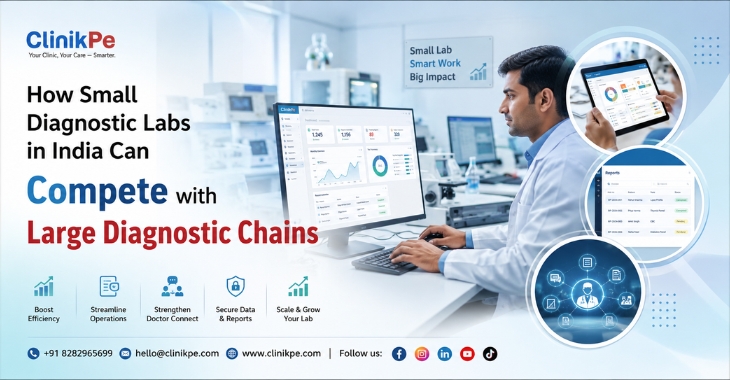
The diagnostic laboratory industry in India has become increasingly competitive. Large diagnostic chains with strong brand recognition, multiple branches, and extensive marketing reach have expanded rapidly across cities and towns. For many small and independent diagnostic labs, competing with these large networks can feel challenging. Patients often associate larger chains with standardized processes, faster reports, and reliable testing infrastructure.
However, smaller labs also have several advantages. They often operate closer to local communities, maintain strong relationships with doctors, and can offer personalized service that larger networks may struggle to provide.
The challenge lies in maintaining operational efficiency, delivering reliable service, and building patient trust consistently. When small labs rely heavily on manual processes or outdated operational systems, it becomes difficult to match the speed and efficiency offered by larger competitors.
By improving workflows, strengthening referral networks, and adopting digital lab management systems, smaller labs can position themselves effectively in a competitive healthcare environment.
The Problem Explained:
Large diagnostic chains typically operate with standardized processes and centralized systems that allow them to manage large testing volumes efficiently.
Small labs, on the other hand, often face operational limitations such as:-
- Manual sample tracking
- Slower report generation
- Limited operational visibility
- Fragmented patient records
- Difficulty managing growing test volumes
These challenges can affect the lab’s ability to provide consistent service quality. For example, if a lab experiences delays in report delivery or difficulty retrieving patient records, referring doctors may begin sending patients to larger labs that offer faster turnaround times. Over time, these operational inefficiencies can reduce patient volume for smaller labs.
Why This Happens in Indian Labs/Clinics:
Several factors contribute to the competitive gap between small labs and large diagnostic chains.
Limited operational systems
Many small labs rely on manual registers or spreadsheets to manage workflows.
Lower technology adoption
Large diagnostic networks often invest in advanced lab management systems that automate operational processes.
Resource constraints
Smaller labs may have limited resources for marketing, infrastructure upgrades, or process improvements.
Increasing patient expectations
Patients today expect faster reports, digital access to results, and reliable service quality.
Without efficient systems, smaller labs may find it difficult to meet these expectations consistently.
Practical Solutions:
Small diagnostic labs can remain competitive by focusing on service quality and operational efficiency.
1. Deliver faster reports
Quick report turnaround time is one of the most important factors influencing patient and doctor satisfaction.
2. Maintain strong doctor relationships
Local referral networks remain an important advantage for smaller labs.
Regular communication with doctors helps maintain trust.
3. Improve patient convenience
Providing digital report access and efficient sample collection services improves patient experience.
4. Maintain consistent service quality
Consistency in testing accuracy and report delivery builds long-term patient trust.
5. Monitor operational performance
Labs should track metrics such as test volumes, turnaround time, and referral trends.
These insights help labs identify areas for improvement.
Technology’s Role:
Digital lab systems help smaller labs improve operational efficiency and compete more effectively with larger networks.
A Lab Management System (LIMS) helps streamline lab operations by providing:
- Digital patient registration
- Sample tracking systems
- Automated report generation
- Centralized patient records
- Referral tracking
- Operational analytics
These tools allow smaller labs to improve workflow efficiency and maintain consistent service quality. With digital systems, labs can deliver faster reports and manage growing patient volumes more efficiently. You can [Explore our Lab Management System] to understand how digital tools support lab operations.
You may also want to read [How Diagnostic Labs Can Increase Repeat Patients] to learn how strong patient relationships support long-term growth.
Implementation Tips:
Small labs can improve competitiveness by gradually improving operational systems.
Implementation Checklist
✔ Improve report turnaround time
✔ Strengthen referral relationships with doctors
✔ Provide digital report access to patients
✔ Maintain organized patient records
✔ Monitor operational performance regularly
✔ Train staff on efficient workflows
✔ Implement scalable lab management systems
These steps help smaller labs maintain efficient operations while improving service quality. If you’re evaluating lab management tools, you can also [View Lab Management System Pricing].
Final Takeaway
While large diagnostic chains have advantages in scale and infrastructure, smaller labs can remain competitive by focusing on efficiency, service quality, and strong local relationships.
Improving workflows, maintaining reliable testing practices, and adopting digital management systems can help smaller labs deliver faster and more convenient services. By combining operational efficiency with personalized patient care, small diagnostic labs can successfully compete with larger diagnostic networks.
Explore our Lab Management System
FAQ Section
Yes. Small labs can compete by providing personalized service, faster workflows, and strong relationships with local doctors.
Small labs often have closer relationships with local communities and can provide more personalized service.
Patients often choose large labs because they offer standardized processes, multiple locations, and digital reporting systems.
Small labs can improve competitiveness by improving report turnaround time, strengthening referral networks, and adopting digital lab management systems.
Yes. Lab management systems help smaller labs streamline operations, deliver faster reports, and manage patient data efficiently.