Diagnostic labs in India are increasingly handling larger volumes of tests as demand for preventive and diagnostic healthcare continues to grow. With rising patient numbers, maintaining efficient operations has become a key challenge for many labs.
Traditionally, many labs relied on manual registers, spreadsheets, or locally installed software to manage operations. While these systems may work in the early stages, they often become difficult to manage as labs expand their services or open additional collection centers.
One of the major limitations of traditional systems is limited accessibility and fragmented data management. Lab owners may not have real-time visibility into operations, and staff may struggle to access patient records across multiple systems.
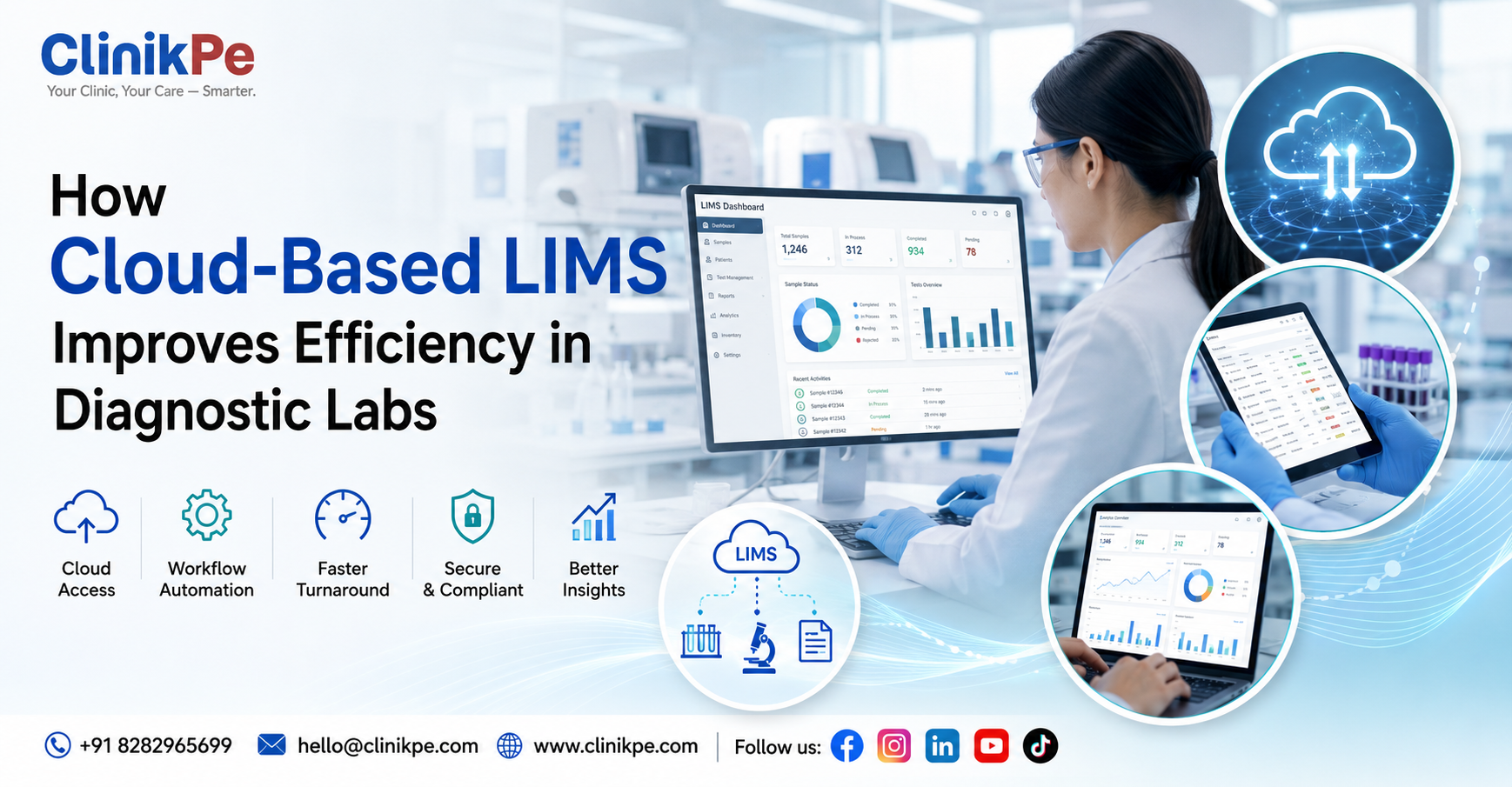
Cloud-based Laboratory Information Management Systems (LIMS) address many of these operational challenges by providing centralized and accessible digital infrastructure.
By enabling real-time data access, automated workflows, and centralized reporting, cloud LIMS platforms help diagnostic labs improve efficiency while supporting operational growth. In this article, we explore how cloud-based LIMS systems help labs streamline operations and manage increasing test volumes more effectively.
The Problem Explained:
Many diagnostic labs experience operational inefficiencies due to outdated or fragmented management systems.
Common operational challenges include:-
- limited access to patient records across devices
- difficulty managing data across multiple branches
- delays in report generation
- dependency on manual data entry
- lack of operational visibility for lab managers
For example, when a lab uses locally installed software or spreadsheets, accessing patient records may require being physically present on a specific computer.
This creates operational limitations for lab owners who need to monitor operations remotely or coordinate workflows between branches. As patient volumes grow, these inefficiencies can slow down operations and increase administrative workload.
Why This Happens in Indian Labs/Clinics:
Several factors contribute to the continued use of traditional lab management systems.
Dependence on desktop-based systems:
Many labs still use software installed on individual computers, which limits accessibility.
Fragmented operational data:
Patient records, billing data, and reports may be stored in different systems, making data management difficult.
Limited scalability:
Traditional systems often struggle to handle increased test volumes or multi-branch operations.
Lack of real-time monitoring:
Lab owners may not have access to real-time operational data when using offline systems. These limitations become more visible as labs grow and operational complexity increases.
Practical Solutions:
Diagnostic labs can improve operational efficiency by transitioning to cloud-based management systems.
Centralize operational data:
Cloud systems store patient records, reports, and operational data in a centralized database accessible from multiple locations.
Enable remote access:
Lab owners and administrators can monitor operations remotely without being physically present at the lab.
Improve collaboration between branches:
Cloud platforms allow different branches to access the same operational data and workflows.
Automate routine processes:
Cloud LIMS systems automate tasks such as report generation and sample tracking, reducing administrative workload.
Improve data security and backups:
Cloud platforms provide automated data backups, reducing the risk of data loss.
Technology’s Role:
Cloud-based Laboratory Information Management Systems (LIMS) are designed to streamline diagnostic lab workflows while providing flexible data access.
Typical features include:-
- centralized patient database
- digital sample tracking
- automated report generation
- referral management
- integrated billing
- operational analytics dashboards
Because the system is hosted in the cloud, lab staff can access the platform through secure internet connections from multiple devices. Cloud systems also support multi-branch lab operations, enabling centralized management across different locations.
You can [Explore our Lab Management System] to see how cloud-based platforms support diagnostic lab operations. You may also want to read [] to understand how centralized systems support expanding labs.
Implementation Tips:
Labs transitioning to cloud-based systems should implement the change gradually.
Implementation Checklist:-
✔ Evaluate existing operational workflows
✔ Identify manual processes that can be automated
✔ Migrate patient records to centralized databases
✔ Train staff on digital workflows
✔ Implement secure user access controls
✔ Monitor operational performance after implementation
✔ Use cloud systems that support future lab expansion
Following these steps helps labs adopt cloud systems smoothly without disrupting operations. If you’re evaluating lab software solutions, you can also [View Lab Management System Pricing].
Final Takeaway:
Cloud-based LIMS systems provide diagnostic labs with the flexibility and scalability needed to manage growing operations. By centralizing patient data, automating workflows, and enabling remote access, cloud platforms help labs improve efficiency while maintaining consistent service quality.
As diagnostic services continue to expand across India, labs that adopt cloud-based infrastructure will be better positioned to manage higher test volumes and multi-branch operations. For labs planning long-term growth, cloud-based lab management systems offer a scalable solution for improving operational efficiency.
Explore our Lab Management System
FAQ Section
A cloud-based LIMS is a laboratory management system hosted on cloud infrastructure, allowing labs to access operational data from multiple devices and locations.
Cloud LIMS automates administrative processes, centralizes data, and improves operational visibility.
Yes. Cloud systems allow multiple lab branches to access centralized data and workflows.
Most cloud platforms include data encryption, secure user access controls, and automated backups.
Yes. Cloud systems allow small labs to manage operations efficiently without requiring complex IT infrastructure.