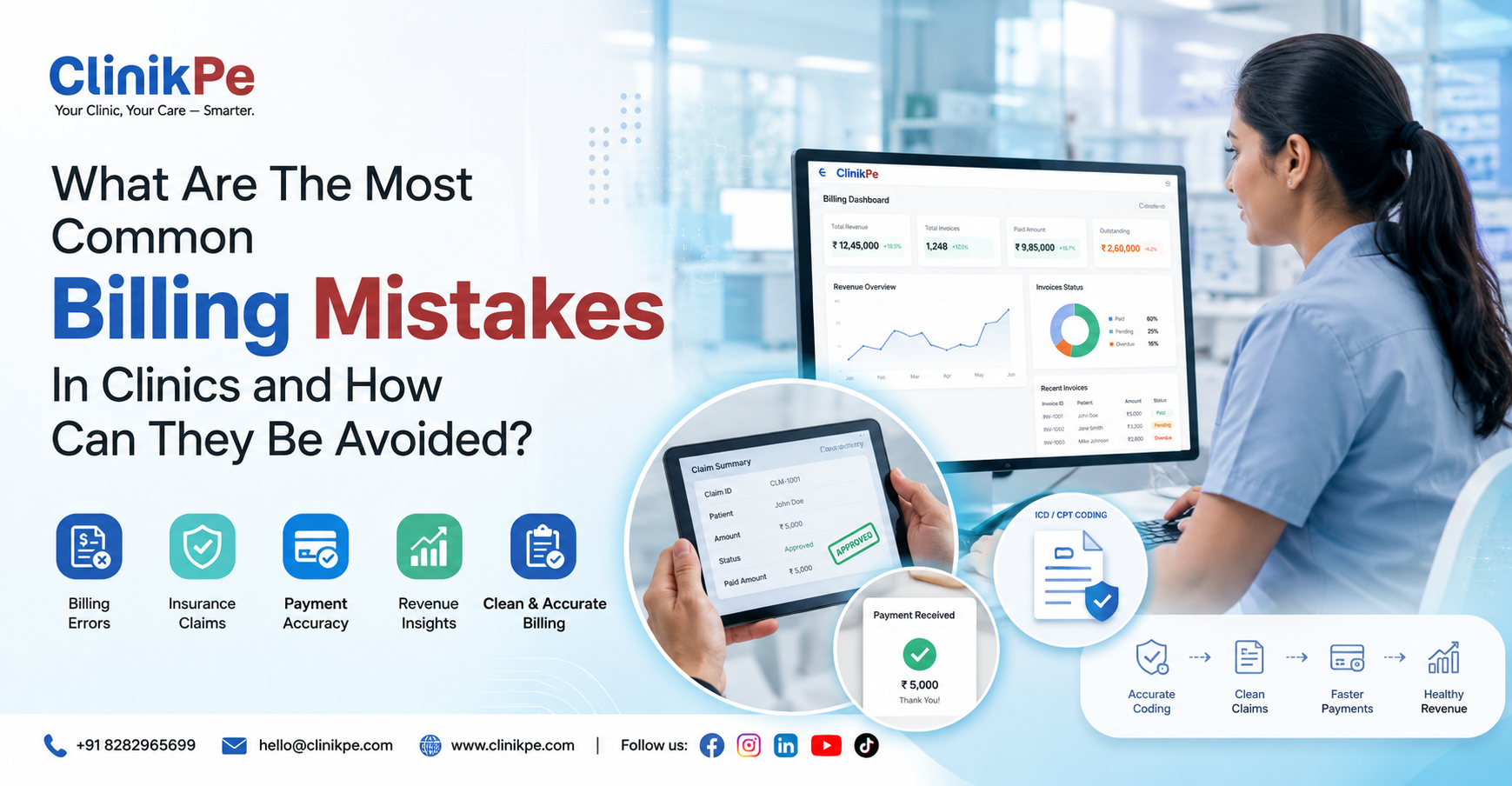
Billing is an essential part of clinic operations. Every consultation, procedure, and service must be recorded accurately to maintain financial transparency and smooth clinic workflows. In many clinics across India, billing is still handled using manual registers, handwritten receipts, or basic spreadsheets. While these methods may work in small setups, they can create operational challenges as patient volumes increase.
Manual billing processes are more prone to errors, including incorrect charges, missed entries, and inconsistent records. These mistakes can lead to revenue loss, accounting discrepancies, and confusion for both clinic staff and patients. Accurate billing is not only important for financial management but also for maintaining patient trust and operational transparency.
By improving billing workflows and adopting digital clinic management systems, clinics can reduce errors, maintain organized financial records, and streamline their administrative processes.
The Problem Explained:
Manual billing systems require clinic staff to record service charges, consultation fees, and payments manually. While straightforward, this process can create several problems.
Common billing mistakes include:-
- Incorrect consultation charges
- Missing service entries
- Duplicate billing records
- Calculation errors
- Difficulty tracking payments
For example, during busy consultation hours, staff may forget to record a specific service or enter an incorrect charge in the billing register. Over time, these small errors can accumulate and affect the clinic’s financial accuracy. Inconsistent billing records also make it difficult for clinic owners to monitor revenue trends or reconcile daily transactions.
Why This Happens in Indian Labs/Clinics:
Several operational factors contribute to billing mistakes in clinics.
Manual billing processes
Many clinics still rely on handwritten billing records or spreadsheets.
High patient volumes
Busy clinics may process dozens of payments daily, increasing the risk of manual errors.
Lack of centralized billing systems
Without digital systems, billing records may be stored across multiple registers or documents.
Limited financial reporting
Manual systems often make it difficult to track revenue trends or analyze financial performance.
These challenges make it harder for clinics to maintain accurate billing records.
Practical Solutions:
Clinics can reduce billing mistakes by implementing structured billing practices.
1. Maintain standardized billing formats
Using consistent billing formats helps reduce confusion and ensures all services are recorded properly.
2. Record services immediately
Billing entries should be recorded as soon as services are provided to avoid missed charges.
3. Maintain centralized billing records
Centralized records allow clinics to track payments and charges more efficiently.
4. Review daily billing reports
Daily reviews help clinics identify billing discrepancies quickly.
5. Train staff on billing procedures
Staff should understand billing workflows to reduce recording errors.
Technology’s Role:
Digital clinic management systems can significantly improve billing accuracy by automating financial workflows.
A Clinic Management System can include features such as:-
- Automated billing generation
- Digital payment tracking
- Integrated consultation charges
- Service-based billing records
- Financial reporting dashboards
These capabilities reduce manual calculations and help clinics maintain organized financial records. Digital billing systems also allow clinic owners to monitor revenue and track payment trends more easily. You can [Explore our Clinic Management System] to understand how digital tools support billing workflows. You may also want to read [Manual vs Digital Clinic Management] to see how digital systems improve clinic operations.
Implementation Tips:
Clinics can improve billing accuracy by following structured processes.
Implementation Checklist
✔ Maintain standardized billing formats
✔ Record services immediately during consultations
✔ Maintain centralized billing records
✔ Review daily financial reports
✔ Train staff on billing procedures
✔ Track payment methods clearly
✔ Implement digital billing systems
These practices help clinics maintain accurate financial records while reducing administrative workload. If you’re evaluating clinic software tools, you can also [View Clinic Software Pricing].
Final Takeaway
Accurate billing is essential for maintaining financial transparency and operational efficiency in clinics. Manual billing systems often create opportunities for errors, especially as patient volumes increase. By implementing structured billing practices and adopting digital clinic management systems, clinics can reduce billing mistakes and maintain more reliable financial records.
Efficient billing systems help clinics manage revenue more effectively while improving administrative workflows.
Explore our Clinic Management System
FAQ Section
Common mistakes include incorrect charges, missed service entries, duplicate billing records, and calculation errors.
Billing errors often occur due to manual record keeping, high patient volumes, and lack of structured billing systems.
Clinics can reduce errors by maintaining standardized billing formats, reviewing daily billing records, and using digital billing systems.
Yes. Clinic software automates billing generation, tracks payments, and maintains organized financial records.
Accurate billing ensures financial transparency, reduces revenue loss, and helps clinics maintain organized financial records.