Running a lab is not just about running tests. It’s about running a business. And like any business, your lab generates a lot of data every single day — patient records, test results, billing entries, referral counts, and more. But here’s the thing: most labs collect this data and do nothing with it.
A Laboratory Management System changes that. It takes all the information your lab already produces and turns it into something you can actually use — insights that help you earn more, waste less, and grow faster.
Let’s break down exactly how that happens:-
1. You Always Know Where Your Money Is
2. Referral Tracking Becomes Your Secret Growth Tool
3. Inventory Stops Bleeding Money Quietly
4. Turnaround Time Directly Impacts Your Reputation
5. Reports You Actually Understand — Not Just Data Dumps
6. Multi-Location Management Without the Chaos
1. You Always Know Where Your Money Is:
One of the biggest headaches for lab owners is reconciling payments at the end of the day. Who paid? Who didn’t? How much is still pending? Without a system, this usually means going through a register or a spreadsheet at 9 PM when you’re already tired.
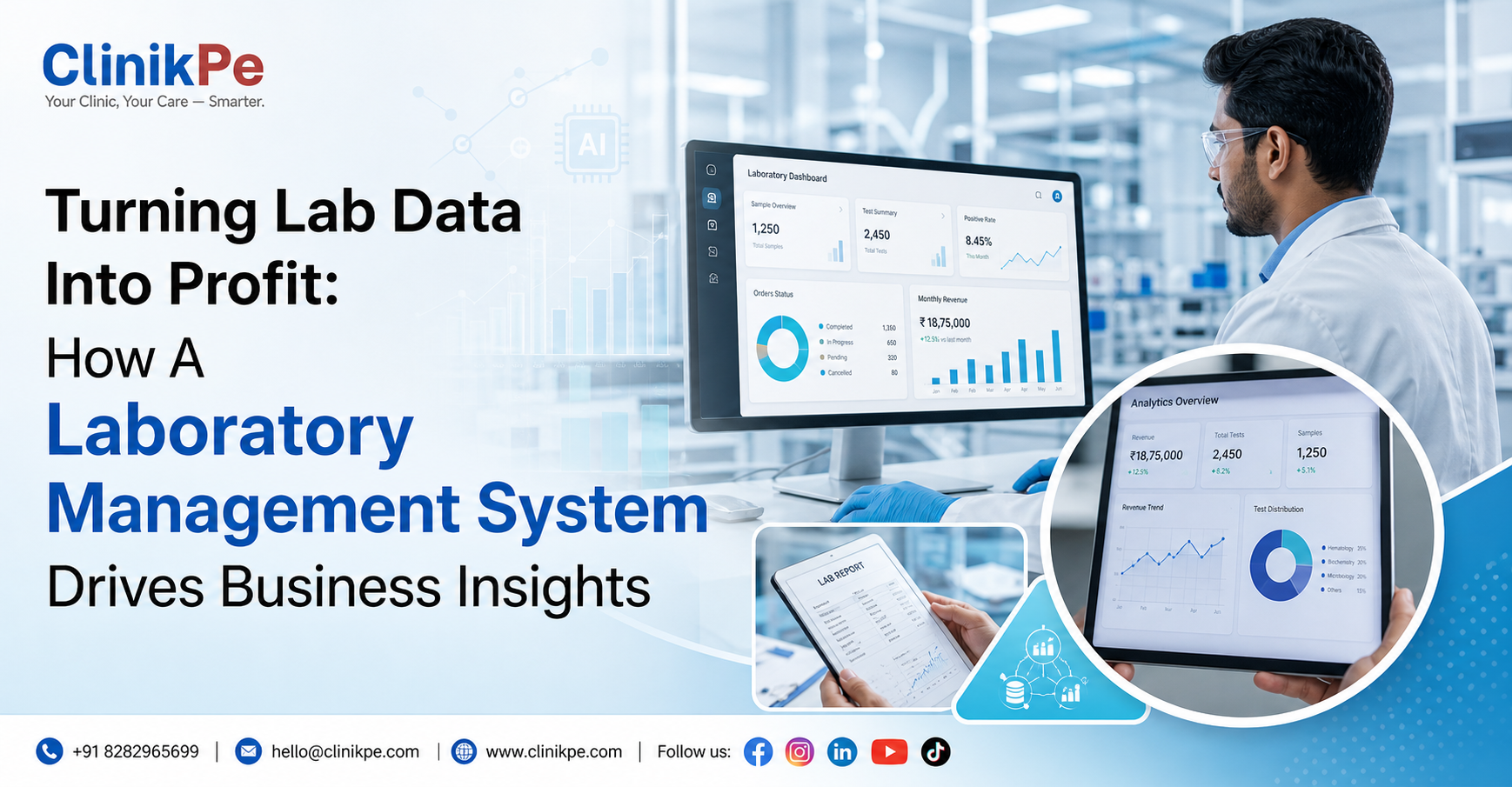
A good lab management system shows you your revenue in real time. You can see collections, pending dues, and daily earnings right on a dashboard — any time you want.
Why this matters for profit:
- You catch pending payments faster, which means fewer write-offs.
- You can spot which days or time slots are generating the most revenue and plan accordingly.
2. Referral Tracking Becomes Your Secret Growth Tool:
Most labs know that doctor referrals drive a big chunk of their business. But very few labs actually track which doctors are sending patients, how often, and what tests they’re ordering.
A Lab Management System Software automatically maintains a complete referral log. Every patient registration links back to the referring doctor, and that data builds over time into a clear picture.
- See your top referrers: You know who to thank, who to follow up with, and who has gone quiet lately.
- Spot new opportunities: If a new doctor starts sending patients, you notice it early and can nurture that relationship before a competitor does.
This kind of data used to require manual tallying of registers. Now it just happens on its own.
3. Inventory Stops Bleeding Money Quietly:
Reagents and consumables are expensive. And in most labs, they either run out at the worst possible time or pile up past their expiry date. Both situations cost money.
When your lab system tracks what gets used per test and alerts you when stock is running low, you stop making panic purchases at inflated prices. You also stop throwing away expired stock you forgot you had. Smart inventory management is one of those things that doesn’t feel exciting — until you realize how much you were losing without it.
4. Turnaround Time Directly Impacts Your Reputation:
Patients talk. If your reports are late, people will know. If your reports arrive on WhatsApp within an hour of sample collection, they tell people that too.
A Laboratory Management System tracks how long each stage of the testing process takes — from sample collection to report delivery. You can see exactly where delays are happening and fix them.
- Identify bottlenecks: Is the delay at sample processing? At the result entry? At report approval? The system shows you.
- Set benchmarks: Once you know your average TAT, you can work on bringing it down — and that becomes a real competitive advantage.
Faster reports mean happier patients, more referrals, and a stronger reputation. It all connects.
5. Reports You Actually Understand — Not Just Data Dumps:
A lot of software gives you data. Very little of it gives you insight. There’s a difference between a screen full of numbers and a report that tells you “your revenue dropped 18% this week compared to last week, and here’s which test category drove that drop.”
A well-built lab management system gives you reports that are easy to read and actually tell you something useful. Daily, weekly, and monthly summaries. Test-wise breakdowns. Patient volume trends. You don’t need to be a data analyst to understand them. When you can read your own business clearly, you make better decisions.
6. Multi-Location Management Without the Chaos:
If you run more than one lab branch, you already know how hard it is to keep track of everything. Each branch feels like a separate business, and getting a clear picture across all of them is exhausting.
A cloud-based lab management system gives you a single dashboard that covers all your branches. You can compare performance, track collections, and monitor test volumes across locations — from one screen, from anywhere. This is how small lab chains start thinking and operating like larger ones.
How ClinikPe Makes All of This Real
In the competitive Indian healthcare landscape, modern LMS solutions like ClinikPe go beyond simple data entry. They integrate billing, inventory, sample tracking, and doctor referrals into a unified cloud-based dashboard — ensuring 100% accuracy and significantly reducing Turnaround Time (TAT).
How ClinikPe’s Lab Management System Works:
ClinikPe is a comprehensive software solution that digitizes and automates every aspect of laboratory operations. Unlike basic record-keeping tools, it integrates patient management, sample tracking, billing, reporting, and business analytics into one unified platform.
| Feature | What It Does |
| Patient Registration | Quick onboarding with Aadhaar integration |
| Sample Collection & Tracking | Barcode-based sample management |
| Testing & Results | Digital result entry with validation |
| Report Generation & Delivery | NABL-compliant reports via WhatsApp |
ClinikPe’s Cloud-Based Advantage:-
- Zero infrastructure investment — no servers, no IT team needed
- Access anywhere — from home, lab, or mobile
- Automatic backups with 99.9% uptime guarantee
- Free updates rolled out automatically.
- Multi-location ready — centralized dashboard for all branches
Before We Wrap Up — Some Questions We Hear a Lot:
You now have a solid picture of how a lab management system can drive business growth. But before we get to the conclusion, let’s quickly answer some of the most common questions lab owners ask about this topic.
Q1. Is a lab management system only useful for large labs?
Not at all. Even a small single-location lab benefits from having organized billing, referral tracking, and inventory management. In fact, smaller labs often see faster results because they can implement changes quickly.
Q2. How long does it take to get started with a system like ClinikPe?
Most labs are up and running within a few days. The onboarding process is guided, and you don’t need any special technical knowledge.
Q3. Will my staff find it hard to learn?
Modern lab management systems are built to be simple. If your staff can use WhatsApp, they can learn the basics quickly. Most teams get comfortable within the first week.
Q4. What happens to my data if the internet goes down?
Cloud-based systems like ClinikPe are designed with offline resilience and automatic backups. Your data is safe even during connectivity issues.
Q5. Can I track referrals from multiple doctors across branches?
Yes. The referral tracking feature works across all locations and provides a consolidated view of which doctors are referring patients, how often, and which tests they’re ordering.
Q6. How does a lab management system help with compliance?
It keeps all your records organized and audit-ready. Reports are generated in NABL-compliant formats, and digital records are far easier to produce during inspections than paper registers.
To Sum It Up
Your lab already generates the data it needs to grow—you just need to use it. A Laboratory Management System helps turn daily numbers into clear, smart decisions across pricing, referrals, and inventory.
With ClinikPe, everything comes together in one simple platform. It reduces confusion and makes your lab easier to manage. Still using spreadsheets? It’s time to upgrade. Get started with ClinikPe today.