Many diagnostic labs in India are gradually adopting Laboratory Information Management Systems (LIMS) to improve efficiency, automate workflows, and manage growing test volumes.
Digital lab systems help streamline several operational processes, including patient registration, sample tracking, reporting, and billing. However, implementing lab software is not only a technical upgrade—it also involves changes in workflow, staff processes, and operational management.
Some labs experience challenges during implementation because the transition from manual systems to digital systems requires proper planning.
For example, staff may continue following manual habits, data migration may be poorly structured, or workflows may not be aligned with the software system. When these issues occur, labs may not fully benefit from the capabilities of a LIMS platform.
Understanding the common mistakes that occur during LIMS implementation can help diagnostic labs adopt digital systems more effectively while minimizing operational disruption.
In this article, we explore the common challenges labs face when implementing LIMS software and the practical steps that help ensure a successful transition.
The Problem Explained:
Many labs invest in software expecting immediate improvements in efficiency. However, problems can arise when implementation is not carefully managed.
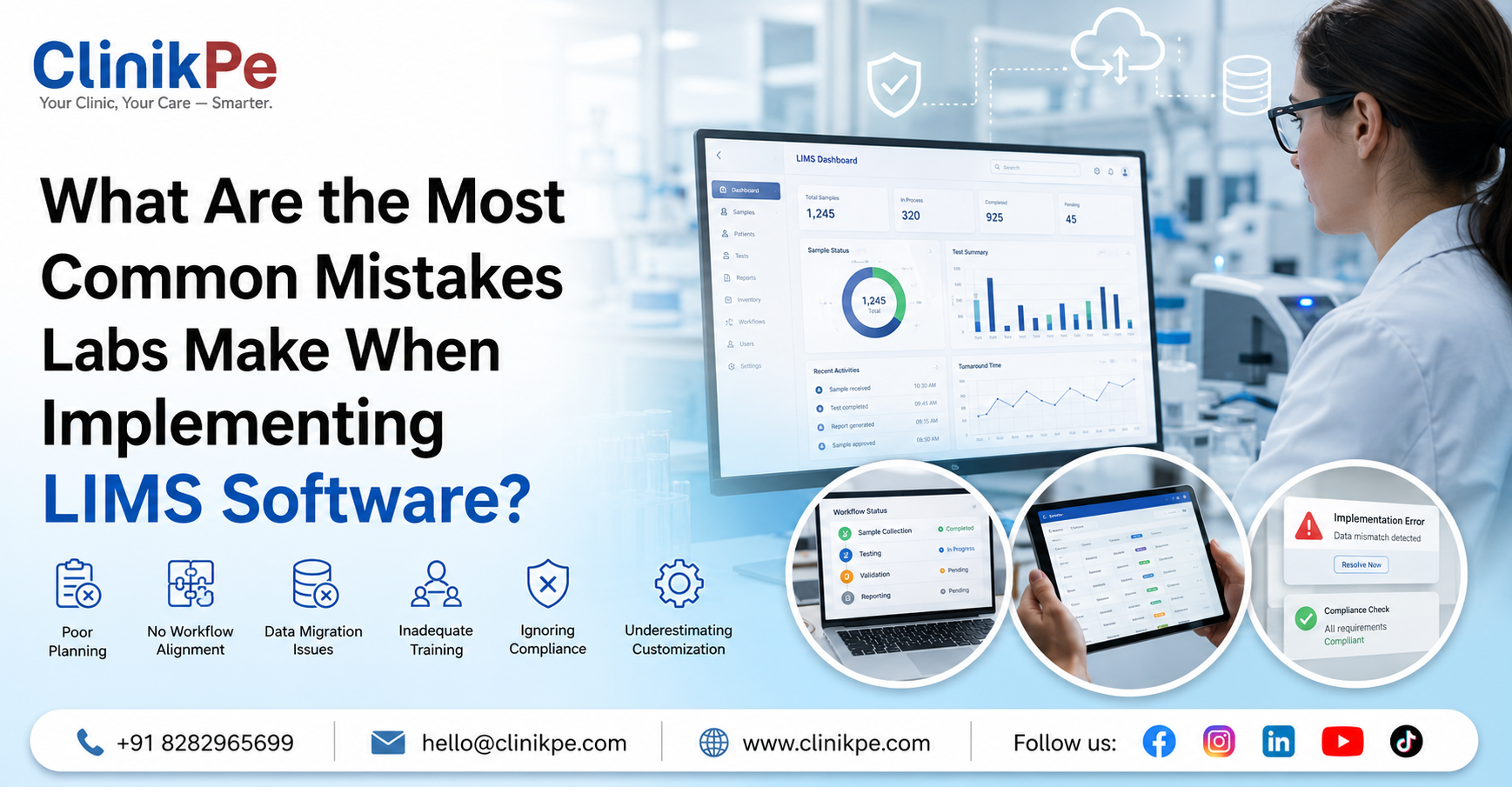
Common implementation issues include:-
- incomplete data migration
- lack of staff training
- poorly defined workflows
- inconsistent data entry practices
- resistance to adopting new systems
For example, if patient records are migrated from spreadsheets without proper formatting, the new system may contain duplicate or incomplete data. Similarly, if staff members are not comfortable using the software, they may revert to manual processes, which reduces the effectiveness of the system.
These problems often occur not because the software is inadequate, but because the implementation process lacks structure.
Why This Happens in Indian Labs/Clinics:
There are several reasons why LIMS implementation challenges occur in many labs.
Limited preparation before implementation:
Some labs adopt software quickly without reviewing their existing workflows. Without clear processes, the software may not align well with operational requirements.
Lack of staff training:
Lab staff may not receive sufficient training on how to use the system effectively. This can lead to confusion and inconsistent usage.
Poor data organization:
If historical data is not properly cleaned or structured before migration, the system may contain errors.
Resistance to workflow changes:
Switching from manual processes to digital workflows requires behavioral changes from staff members. Some employees may find it difficult to adapt initially.
Practical Solutions:
Labs can avoid many implementation challenges by following structured implementation practices.
Review existing workflows:
Before implementing software, labs should analyze their current operational processes and identify inefficiencies. This helps align the software with real workflow requirements.
Clean and organize existing data:
Patient records, test lists, and reporting formats should be reviewed before migration. Well-organized data ensures smoother system integration.
Provide staff training:
Training sessions help staff understand how the system works and how it improves daily workflows. Continuous support during the early stages of implementation is also helpful.
Standardize data entry:
Consistent data entry practices help maintain accurate records and reduce errors. Labs should define clear guidelines for entering patient details and test information.
Monitor system usage:
Lab managers should regularly monitor how the system is used and identify areas where staff may need additional guidance.
Technology’s Role:
A properly implemented Lab Management System (LIMS) can significantly improve lab operations.
Modern LIMS platforms provide capabilities such as:-
- automated patient registration
- sample tracking
- digital report generation
- billing integration
- referral tracking
- operational analytics
These features reduce manual workload and improve workflow transparency. Digital systems also allow labs to monitor operational performance and manage growing patient volumes more efficiently.
You can [Explore our Lab Management System] to understand how LIMS platforms simplify lab operations. You may also want to read [LIMS vs Excel for Lab Management] to compare manual systems with digital lab management tools.
Implementation Tips:
Labs implementing LIMS software can follow a structured process to ensure success.
Implementation Checklist:
✔ Review current lab workflows
✔ Prepare and clean existing data before migration
✔ Conduct staff training sessions
✔ Standardize data entry processes
✔ Start with core modules such as sample tracking and reporting
✔ Monitor early system usage and provide support
✔ Gradually integrate billing and referral management
Following these steps helps ensure that labs can fully benefit from digital lab systems. If you’re evaluating lab software options, you can also [View Lab Management System Pricing].
Final Takeaway:
Implementing a Lab Management System can significantly improve the efficiency of diagnostic labs, but successful implementation requires careful planning. Many implementation challenges arise due to lack of preparation, insufficient training, or poorly structured workflows.
By preparing data properly, training staff effectively, and aligning software with operational processes, labs can ensure a smooth transition to digital systems. As diagnostic labs continue to grow across India, adopting well-implemented digital infrastructure can help labs improve accuracy, streamline workflows, and scale operations more efficiently.
Explore our Lab Management System
FAQ Section
A Laboratory Information Management System (LIMS) is software that helps diagnostic labs manage patient records, sample tracking, reporting, and billing.
LIMS implementations may face challenges due to poor data preparation, lack of staff training, and unclear workflow processes.
Implementation timelines vary depending on lab size and workflow complexity, but cloud-based systems can often be implemented quickly.
Yes. Even small labs benefit from automated workflows and improved sample tracking provided by LIMS platforms.
Yes. LIMS automates many administrative tasks, allowing lab staff to focus on core diagnostic operations.