Many diagnostic labs in India still rely on manual workflows, registers, and Excel sheets to manage their daily operations. At first glance, these systems seem cost-effective. There is no major software investment, and staff are already familiar with manual processes.
However, the true cost of manual lab management often goes unnoticed.
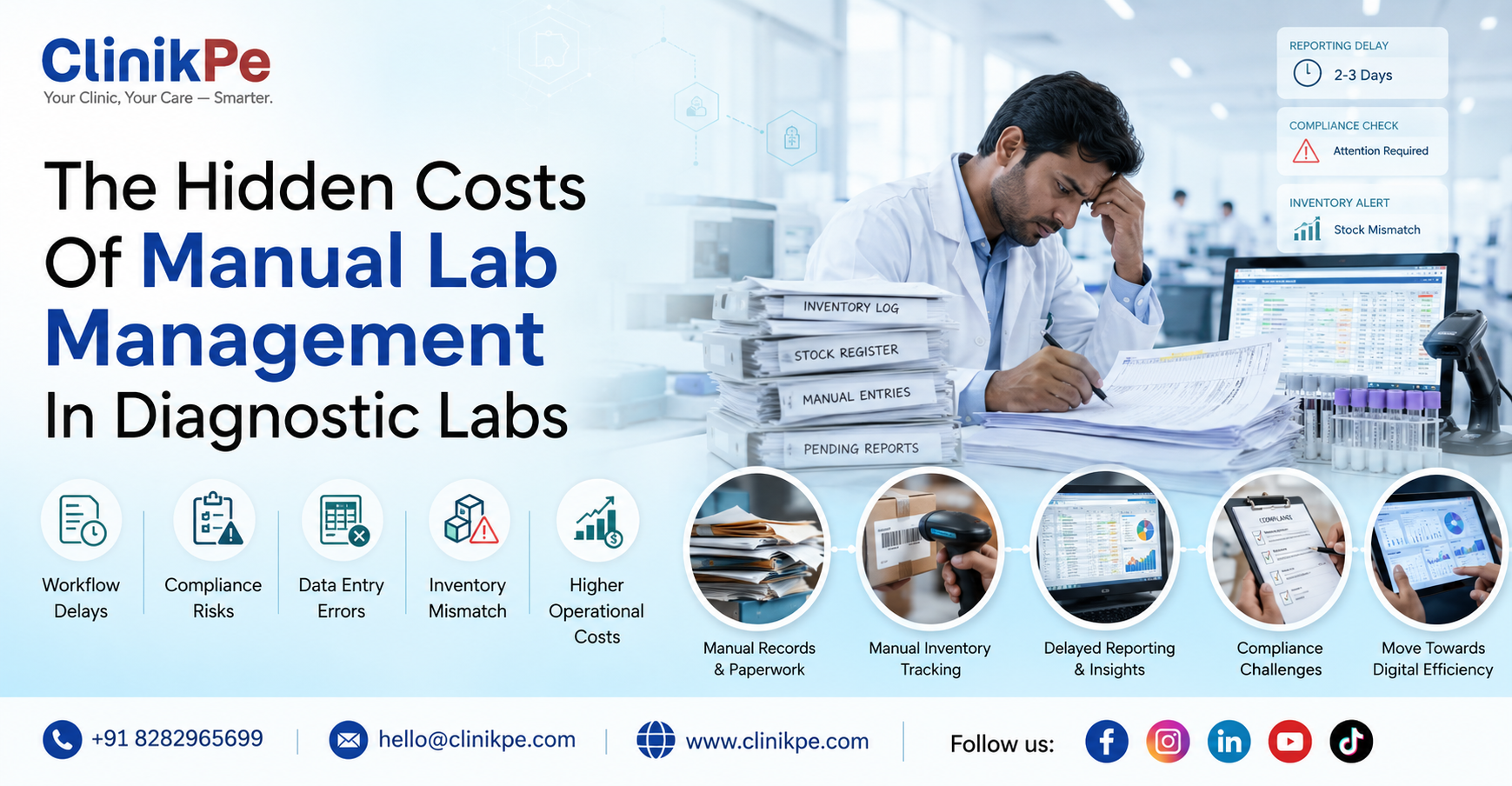
Operational inefficiencies slowly accumulate—delayed reports, sample tracking issues, billing errors, and staff dependency on repetitive tasks. These inefficiencies may not appear immediately in financial statements, but they affect productivity, patient satisfaction, and long-term scalability.
As diagnostic labs grow and test volumes increase, manual systems start creating bottlenecks across the workflow.
This is why many labs today are evaluating digital lab management systems and LIMS software to streamline operations.
In this article, we explore the hidden operational costs of manual lab management, why they occur in many Indian labs, and how technology can help labs operate more efficiently.
The Problem Explained:
Manual lab management involves handling operations through:-
- paper registers
- spreadsheets
- manual report formatting
- separate billing systems
- disconnected data records
While these systems may work for labs handling very low daily test volumes, problems emerge as the number of samples increases.
For example, imagine a diagnostic lab processing 150 samples per day.
Each sample requires multiple steps:-
• patient registration
• sample collection
• test allocation
• result entry
• report generation
• billing
When these steps are handled manually, small inefficiencies start adding up.
Common operational issues include:-
- Staff spending excessive time entering repetitive data
- Difficulty locating previous patient records
- Delays in generating and delivering reports
- Manual reconciliation of billing and referrals
These operational delays reduce overall efficiency and affect how quickly labs can serve patients.
Why This Happens in Indian Labs and Clinics:
Manual systems continue to exist in many labs due to several practical reasons.
1. Traditional workflows
Many diagnostic labs started operations when manual registers were the standard system for managing patient data. Over time, spreadsheets replaced paper registers, but the workflow structure remained largely unchanged.
2. Cost concerns
Lab owners often assume that adopting specialized software will significantly increase operational expenses. As a result, they continue using spreadsheets or paper systems.
3. Lack of workflow visibility
Manual systems make it difficult for lab owners to see where inefficiencies exist.
For example:–
- How long does sample processing take?
- Which tests have the longest turnaround time?
- Which referral sources bring the most patients?
Without centralized data, answering these questions becomes difficult.
Staff dependency:
Manual processes rely heavily on specific staff members who understand the workflow.
If key staff members are absent, operations can slow down significantly.
Over time, these inefficiencies create operational limitations that prevent labs from scaling.
Practical Solutions:
Labs looking to improve operational efficiency can start by identifying and reducing manual bottlenecks.
Here are several practical steps diagnostic labs can implement:-
Digitize patient registration:
Instead of recording patient details in registers or spreadsheets, labs should use digital systems that store data centrally. This improves record retrieval and reduces duplicate entries.
Automate report generation:
Manual report formatting consumes significant staff time. Automated reporting systems can:
- generate standardized reports
- reduce formatting errors
- deliver results faster
Track samples digitally:
Each sample should have a unique ID or barcode so its status can be tracked throughout the workflow. This reduces confusion and improves operational transparency.
Integrate billing with lab operations:
Many labs maintain separate systems for:-
- billing
- patient records
- test results
Integrating these processes reduces reconciliation errors.
Monitor workflow performance:
Digital systems allow labs to track:-
- test volume trends
- turnaround time
- operational efficiency
This data helps lab owners make better decisions.
Technology’s Role in Modern Lab Operations:
Modern diagnostic labs increasingly rely on Lab Management Systems (LIMS) to streamline operations. A LIMS platform centralizes multiple functions within a single system.
Typical features include:-
• patient registration
• sample tracking
• automated report generation
• billing management
• referral tracking
• inventory monitoring
Instead of managing separate spreadsheets, labs can monitor their entire workflow through a single dashboard.
Cloud-based systems also allow lab owners to access operational data remotely, which becomes especially useful for multi-branch labs or growing diagnostic chains.
If you’re exploring digital solutions for lab operations, you can [Explore our Lab Management System].
You may also want to read [LIMS vs Excel for Lab Management] to understand how digital systems compare with spreadsheets.
Implementation Tips:
Labs planning to move away from manual management should take a structured approach.
Implementation checklist:
✔ Review current workflow processes
✔ Identify repetitive manual tasks
✔ Evaluate lab software that fits your operational scale
✔ Train staff on new digital workflows
✔ Start with sample tracking and reporting automation
✔ Gradually integrate billing and referral management
✔ Monitor operational improvements
Labs that adopt digital systems often experience improvements in:-
- report turnaround time
- operational transparency
- staff productivity
- patient satisfaction
If you’re evaluating digital lab software, you can also [View Lab Management System Pricing].
Final Takeaway:
Manual lab management may appear cost-effective at first, but the hidden operational costs can significantly affect efficiency and scalability.
As diagnostic labs grow, manual systems often lead to:-
- slower workflows
- reporting delays
- operational confusion
- limited visibility into performance
Digital lab management systems help labs streamline operations, reduce errors, and improve overall productivity. If you’re looking to modernize your diagnostic lab operations, adopting the right technology can make a significant difference.
Explore our Lab Management System
FAQ Section
Manual lab systems often lead to delayed reports, data duplication, sample tracking issues, and inefficient workflows.
Many labs continue using manual systems due to cost concerns, traditional workflows, and lack of awareness about digital lab management tools.
A Lab Management System is software designed to manage lab operations including sample tracking, reporting, billing, and workflow automation.
Yes. Many modern LIMS platforms are designed specifically for small and mid-sized diagnostic labs.
Lab software automates repetitive tasks such as report generation, sample tracking, and billing, allowing staff to focus on core lab operations.