If you run or manage a diagnostic lab, you may have heard the term LIMS software. But what exactly does it mean?
LIMS stands for Laboratory Information Management System.
It is software designed to manage laboratory operations, track samples, organize data, automate workflows, and generate reports.
In simple terms, LIMS helps laboratories move from manual processes to structured digital management.
LIMS Software Definition (Simple Explanation)
A Laboratory Information Management System (LIMS) is a digital platform that manages:
- Sample tracking
- Patient or test data
- Workflow automation
- Report generation
- Inventory tracking
- Billing integration
It ensures laboratories operate efficiently, accurately, and with full visibility.
What Does LIMS Stand For?
LIMS = Laboratory Information Management System.
The term originated in research and testing labs, but today it is widely used in:
- Diagnostic laboratories
- Pathology labs
- Research labs
- Pharmaceutical labs
- Environmental testing facilities
How Does LIMS Software Work?
At its core, LIMS software follows the sample lifecycle.
Here’s how it typically works:-
1️⃣ Patient or sample is registered
2️⃣ Sample is assigned a unique ID
3️⃣ Test is processed
4️⃣ Results are entered or integrated from machines
5️⃣ Report is generated
6️⃣ Billing is completed
7️⃣ Data is stored securely
Everything is tracked digitally.
This reduces manual paperwork and improves accuracy.
Key Features of LIMS Software
Modern LIMS platforms include:-
| Feature | Purpose |
| Sample Tracking | Monitor sample status in real time |
| Workflow Automation | Reduce manual processes |
| Report Generation | Create structured lab reports |
| Billing Integration | Automate invoice creation |
| Inventory Management | Track reagent usage |
| User Access Control | Secure data permissions |
| Analytics Dashboard | Monitor performance metrics |
Some advanced systems also include referral tracking and multi-branch management.
Why Do Diagnostic Labs Use LIMS?
As labs grow, manual systems create:
- Reporting delays
- Billing errors
- Inventory mismanagement
- Data inconsistencies
LIMS software helps by:
✔ Improving turnaround time
✔ Reducing human error
✔ Increasing operational efficiency
✔ Enhancing compliance
✔ Providing better data visibility
For labs processing even moderate daily volumes, digital management becomes essential.
Difference Between LIMS and LIS
LIMS focuses more on workflow and sample tracking.
LIS (Laboratory Information System) focuses more on patient record management and reporting.
Many modern platforms combine both capabilities into a unified lab management system.
Types of LIMS Software
1️⃣ Cloud-Based LIMS
Hosted online and accessed via browser.
Popular among small and mid-sized labs.
2️⃣ On-Premise LIMS
Installed on local servers.
Requires IT infrastructure.
Cloud systems are increasingly preferred due to flexibility and lower upfront investment.
Is LIMS Necessary for Small Labs?
Yes.
Even small labs benefit from:
- Automated billing
- Faster reporting
- Better inventory tracking
- Reduced manual workload
Scalable cloud systems make adoption practical for small diagnostic centers.
When Should a Lab Implement LIMS?
You should consider LIMS if:
- You rely on manual registers
- You use spreadsheets for billing
- Report turnaround time is inconsistent
- Inventory wastage occurs
- You plan to expand
Early implementation simplifies long-term growth.
Frequently Asked Questions
1. What is LIMS software used for?
LIMS software is used to manage laboratory workflows, track samples, generate reports, and maintain accurate data records.
2. Is LIMS only for large laboratories?
No. Modern cloud-based LIMS solutions are suitable for small and mid-sized diagnostic labs.
3. What is the difference between LIMS and laboratory management software?
They are often used interchangeably. Laboratory management software may include broader operational tools like billing and referral tracking.
4. Is cloud-based LIMS secure?
Yes. Most platforms use encrypted connections and secure data hosting environments.
5. How do I choose the right LIMS software?
Evaluate workflow compatibility, scalability, pricing transparency, support quality, and integration capabilities.
How ClinikPe Implements LIMS for Diagnostic Centers
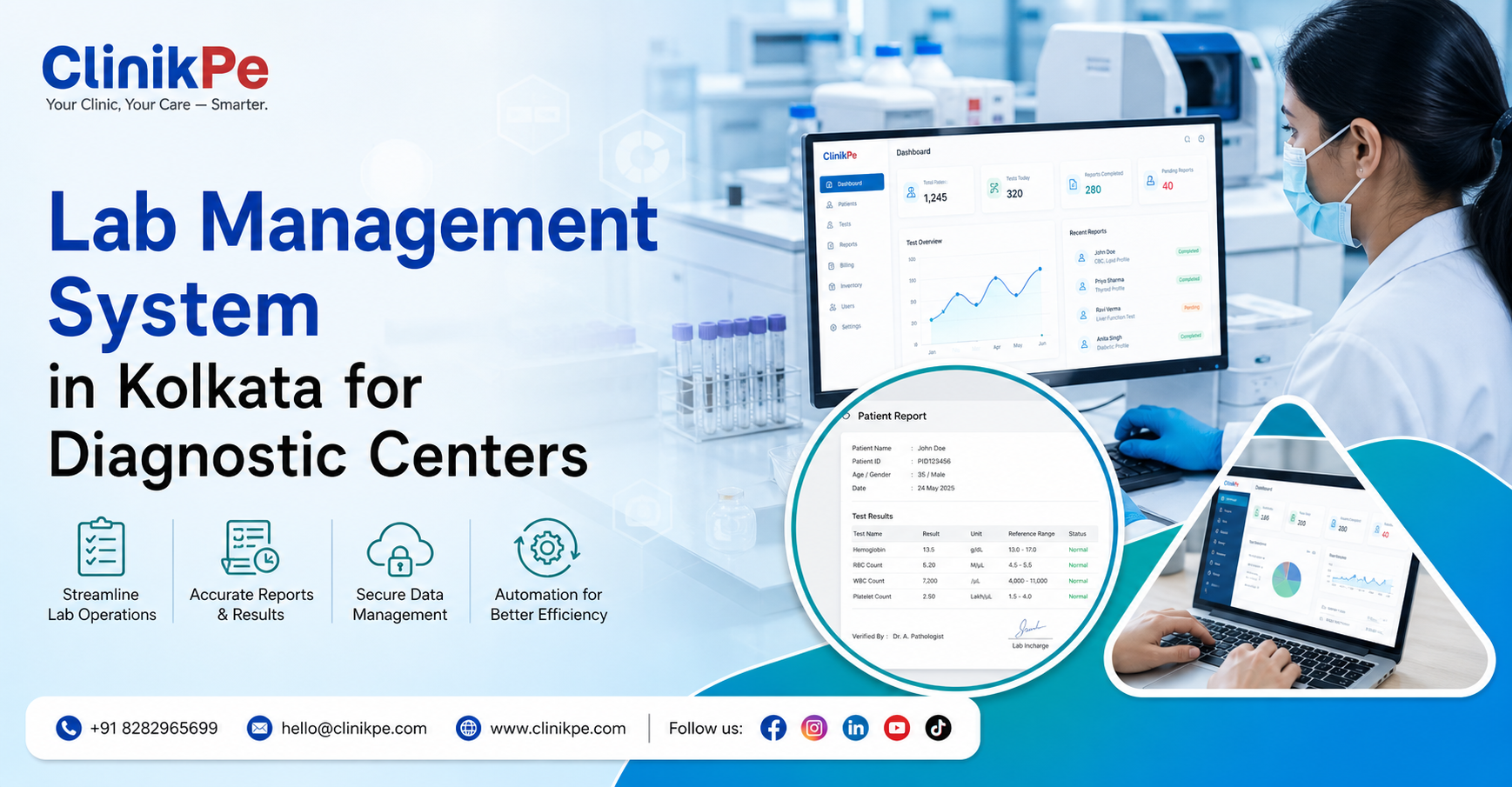
ClinikPe provides a lab management system designed specifically for diagnostic labs.
It integrates:
- Sample tracking
- Billing automation
- Inventory management
- Referral tracking
- Cloud accessibility
In one structured platform.