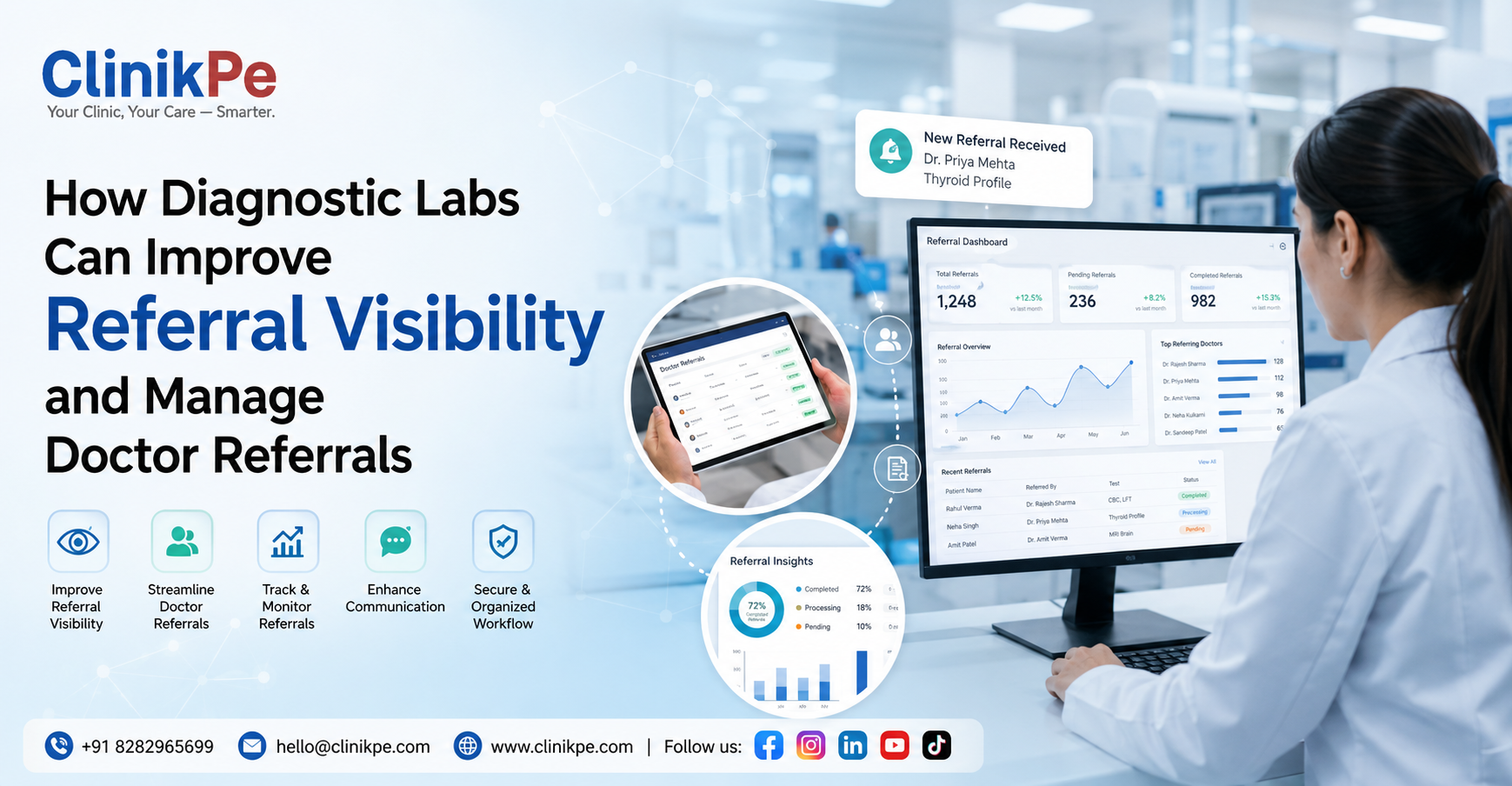
Doctor referrals remain one of the most important sources of patients for diagnostic laboratories in India. Many labs depend heavily on relationships with local physicians, clinics, and hospitals to receive a steady flow of diagnostic tests.
However, as labs grow and work with multiple referral partners, managing referral information becomes increasingly complex. Without proper systems in place, labs may struggle to track which doctors are sending patients, how many tests are being referred, and how referral relationships are performing over time.
In many diagnostic labs, referral tracking is still managed using manual registers or spreadsheets. While these methods may work when the number of referrals is small, they can become difficult to manage as the network of referring doctors expands.
Limited visibility into referral data makes it harder for labs to strengthen referral partnerships or identify growth opportunities. Improving referral visibility allows labs to better understand their referral network, maintain strong relationships with doctors, and manage referral performance more effectively.
The Problem Explained:
Referral visibility refers to a lab’s ability to track and analyze the sources of patient referrals. When labs rely on manual systems to manage referral data, several challenges can arise.
Common problems include:-
- Difficulty tracking which doctor referred a patient
- Lack of clear records for referral commissions
- Inconsistent documentation of referral details
- Limited insights into referral performance
- Difficulty identifying top referral partners
For example, when a patient arrives at a lab, staff may record the referring doctor’s name manually in a register. Over time, these records can become difficult to analyze or retrieve, especially when labs need to review referral trends. Without structured referral tracking, labs may miss opportunities to strengthen relationships with high-performing referral partners.
Why This Happens in Indian Labs/Clinics:
Several operational factors contribute to limited referral visibility in many labs.
Manual referral tracking:
Many labs record referral details manually during patient registration. These records are often scattered across registers or spreadsheets.
Lack of centralized referral data:
Referral information may not be stored in a centralized system that allows easy analysis.
Growing referral networks:
As labs expand their network of referring doctors, managing referral information manually becomes more complex.
Limited performance insights:
Without structured referral tracking, labs may not know which doctors are sending the most patients or which referral channels are growing. These limitations make it harder for labs to manage referral partnerships strategically.
Practical Solutions:
Diagnostic labs can improve referral visibility by implementing structured tracking systems.
1. Record referral information consistently:
Patient registration processes should include a dedicated field for recording referral sources.
2. Maintain centralized referral databases:
Centralized records allow labs to track all referral data in one place.
3. Analyze referral trends regularly:
Labs should periodically review referral data to identify:-
- top referring doctors
- referral growth trends
- opportunities to strengthen partnerships
4. Maintain clear commission records:
Structured referral tracking helps labs maintain transparency when managing referral commissions.
5. Strengthen communication with referral partners:
Maintaining regular communication with doctors helps build stronger referral relationships.
Technology’s Role:
Digital lab systems can significantly improve referral visibility by centralizing referral data and providing analytical insights. A Lab Management System (LIMS) allows labs to track referral information during patient registration and generate referral performance reports.
Typical capabilities include:-
- Referral source tracking
- Patient registration integration
- Referral performance reports
- Billing integration
- Operational analytics
These tools help lab managers better understand referral patterns and maintain stronger relationships with doctors. You can [Explore our Lab Management System] to understand how digital tools improve referral management. You may also want to read [How Diagnostic Labs Can Grow and Increase Test Volume] to understand how referral networks contribute to lab growth.
Implementation Tips:
Labs can improve referral visibility through structured implementation steps.
Implementation Checklist:-
✔ Include referral source fields in patient registration
✔ Maintain centralized referral databases
✔ Track referral trends regularly
✔ Maintain clear referral commission records
✔ Communicate regularly with referral doctors
✔ Train staff to record referral data accurately
✔ Use digital systems for referral analytics
These practices help labs maintain clear visibility into their referral networks. If you’re evaluating lab management tools, you can also [View Lab Management System Pricing].
Final Takeaway:
Doctor referrals continue to play a crucial role in the growth of diagnostic labs in India. However, managing referral networks effectively requires clear visibility into referral data and performance. Manual tracking methods can make it difficult to analyze referral trends and maintain organized records.
By implementing structured referral tracking systems and adopting digital lab management tools, labs can gain better insights into their referral networks and strengthen relationships with doctors.
Improved referral visibility ultimately helps labs increase patient volume while maintaining transparent and efficient operations.
Explore our Lab Management System
FAQ Section
Doctor referrals are a major source of patients for many diagnostic labs and help maintain consistent test volumes.
Referral visibility refers to a lab’s ability to track and analyze which doctors or clinics are referring patients.
Labs can track referrals by recording referral information during patient registration and maintaining centralized records.
Yes. LIMS platforms can track referral sources and generate referral performance reports.
Labs can maintain strong referral relationships by delivering reports quickly, communicating regularly, and maintaining transparent referral records.