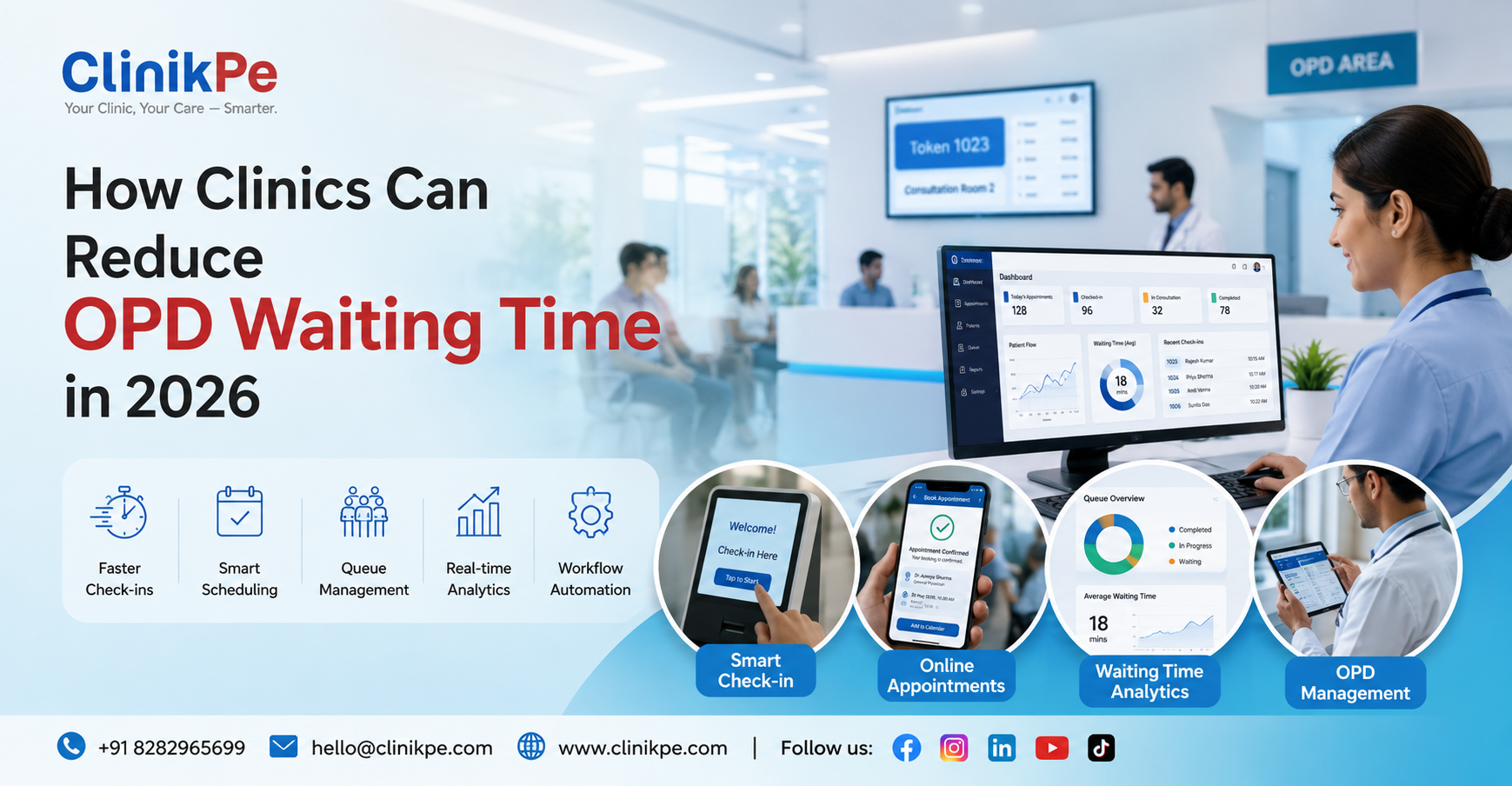
Long waiting times in outpatient departments (OPDs) are one of the most common complaints patients have about clinics in India.
Whether it’s a small single-doctor practice or a multi-speciality clinic, patients often spend 30 minutes to over an hour waiting for consultations, even when the actual consultation lasts only a few minutes.
While waiting rooms are a normal part of healthcare operations, excessive waiting time can negatively affect patient experience, clinic reputation, and operational efficiency.
In many cases, the problem is not the number of patients—but the workflow management system used inside the clinic.
Manual appointment registers, walk-in crowd management, and disconnected billing systems often create delays across the OPD workflow.
This is why many clinics are now exploring digital appointment and clinic management systems to streamline operations and reduce waiting time.
In this article, we’ll explore why OPD waiting time becomes a problem in many Indian clinics and what practical steps clinics can take to manage patient flow more efficiently.
The Problem Explained:
In most clinics, OPD waiting time increases due to unstructured patient flow.
Patients typically arrive through multiple channels:-
- walk-in visits
- phone bookings
- referrals from other doctors
- follow-up appointments
Without a structured system, managing these patients becomes difficult.
For example:
A clinic may schedule 20 patients between 10 AM and 12 PM, but many patients arrive at the same time because appointment timing is not strictly managed.
This creates:-
• crowded waiting areas
• delayed consultations
• frustrated patients
• overworked front-desk staff
In addition, when patient details are recorded manually, staff often spend extra time:-
- searching previous records
- creating new entries
- verifying patient history
These delays may seem small individually, but across dozens of patients they significantly increase waiting time.
Why This Happens in Indian Clinics:
There are several operational reasons why waiting times remain high in many clinics.
1. Walk-in heavy patient flow:
Many clinics in India rely heavily on walk-in patients instead of scheduled appointments.
This creates unpredictable patient loads.
2. Manual appointment registers:
Paper-based appointment systems do not provide visibility into:-
- patient arrival times
- consultation progress
- queue management
3. Front desk overload:
Reception staff often handle multiple tasks simultaneously:-
- patient registration
- appointment management
- billing
- phone calls
This slows down patient processing.
4. Lack of workflow visibility:
Doctors and clinic managers rarely have access to real-time data showing:-
- number of patients waiting
- consultation progress
- appointment schedules
Without operational visibility, managing patient flow becomes difficult.
Practical Solutions:
Reducing OPD waiting time requires a combination of better scheduling, improved workflows, and digital tools.
Here are practical strategies clinics can implement:-
Introduce structured appointment scheduling:
Instead of booking multiple patients for the same time slot, clinics should implement time-based appointment slots.
For example:-
- 10-minute consultation slots
- controlled patient intervals
- buffer time between appointments
This improves patient flow and reduces overcrowding.
Enable online appointment booking:
Allowing patients to book appointments online reduces front desk workload and spreads patient arrivals more evenly.
Online booking also helps clinics:-
- Plan daily workload
- Reduce phone call interruptions
- Manage follow-up visits
Digitize patient registration:
Manual patient entry takes time and creates duplication errors.
Digital registration systems allow clinics to:-
- retrieve patient history instantly
- update records quickly
- avoid repetitive data entry
Use queue management systems:
Queue management systems help clinics track:-
- number of patients waiting
- consultation order
- estimated waiting time
This improves transparency for both staff and patients.
Optimize consultation workflows:
Doctors often lose time between consultations due to administrative tasks.
Digital systems can automate:-
- prescription generation
- billing integration
- patient record updates
This allows doctors to focus more on consultations.
Technology’s Role in Modern Clinics:
Digital clinic management systems are increasingly helping clinics improve OPD efficiency.
These systems typically include features such as:-
• appointment scheduling
• patient registration
• digital prescriptions
• billing integration
• patient history tracking
With centralized systems, clinics can monitor:-
- patient flow
- doctor availability
- appointment schedules
This improves operational visibility and helps reduce bottlenecks.
Cloud-based clinic management systems also allow clinic owners to monitor operations remotely.
If you’re exploring digital tools for clinic operations, you can [Explore our Clinic Management System].
You may also want to read our [Complete Guide to Healthcare Digitalization] to understand how digital systems improve clinic workflows.
Implementation Tips:
Clinics planning to improve OPD workflow should implement changes gradually.
Implementation checklist:
✔ Evaluate current appointment workflow
✔ Identify peak patient hours
✔ Introduce time-based appointment slots
✔ Digitize patient registration
✔ Implement queue management
✔ Train staff on digital systems
✔ Monitor patient waiting time regularly
Clinics that optimize their workflows often see improvements in:-
- patient satisfaction
- consultation efficiency
- staff productivity
- clinic reputation
If you’re exploring clinic software options, you can also [View Clinic Software Pricing].
Final Takeaway:
Long OPD waiting times are often a result of workflow inefficiencies rather than patient volume. Manual appointment systems, unstructured patient flow, and administrative overload can significantly slow down clinic operations.
By adopting structured appointment scheduling and digital clinic management systems, clinics can reduce waiting time while improving overall patient experience. As healthcare expectations continue to evolve in India, clinics that optimize their operations will be better positioned to deliver faster and more efficient care.
If you’re looking to streamline your clinic workflow:-
FAQ Section
Long waiting times are often caused by manual appointment systems, walk-in patient overload, and inefficient workflow management.
Clinics can reduce waiting time by implementing structured appointment scheduling, digital patient registration, and queue management systems.
An OPD management system is software designed to manage outpatient workflows including appointments, patient records, billing, and prescriptions.
Yes. Many modern clinic management systems are designed specifically for small and mid-sized clinics.
Yes. Online appointment systems distribute patient visits more evenly throughout the day, reducing overcrowding in clinics.