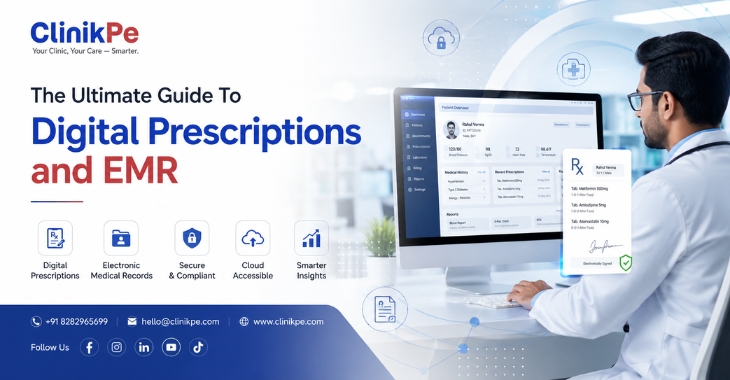
The healthcare industry is rapidly moving toward digital transformation. Paper prescriptions, handwritten records, and manual data entry are gradually being replaced by smarter and more efficient digital systems.
Today, clinics, hospitals, and diagnostic laboratories need technology that can improve workflow, reduce administrative tasks, and provide a better patient experience. Digital prescriptions and Electronic Medical Records (EMR) play a major role in achieving these goals.
When combined with Laboratory Management System Software, healthcare organizations can create a connected ecosystem where patient records, laboratory reports, and prescriptions work together seamlessly. If you’re planning to modernize your healthcare practice, understanding the benefits of digital prescriptions and EMR can help you make the right decision.
Let’s explore everything you need to know:-
1. What Are Digital Prescriptions and EMR?
2. How Do Digital Prescriptions Work?
3. What Is the Role of EMR in Healthcare?
4. How Does Laboratory Management System Software Support EMR?
5. What Are the Benefits of Digital Healthcare Systems?
6. Why Is Data Security Important?
7. How Can Digital Healthcare Improve Clinic Growth?
8. How Do You Choose the Right Digital Healthcare Platform?
1. What Are Digital Prescriptions and EMR?
Digital prescriptions are electronic versions of traditional paper prescriptions that allow healthcare providers to create, manage, and store medication records digitally.
An Electronic Medical Record (EMR) is a digital version of a patient’s health history that may include:
Patient information
Medical history
Diagnoses
Prescriptions
Laboratory reports
Treatment plans
Clinical notes
Together, these technologies help improve communication and reduce paperwork.
Many healthcare providers invest in Laboratory Management System Software because it helps connect laboratory operations with digital patient records.
2. How Do Digital Prescriptions Work?
Digital prescription systems allow healthcare professionals to generate and manage prescriptions electronically.
Some common features include:
Electronic prescription creation
Medication history tracking
Patient record integration
Reduced paperwork
Faster prescription management
Digital systems help improve efficiency while minimizing manual documentation.
A connected healthcare platform creates a smoother experience for both patients and providers.
3. What Is the Role of EMR in Healthcare?
An EMR system acts as a centralized database for patient information.
Healthcare professionals can quickly access important records and make informed decisions.
Benefits may include:
Better Record Management
Patient information remains organized and accessible.
Improved Communication
Different departments can share information more efficiently.
Better Workflow
Digital systems help reduce repetitive administrative tasks.
Enhanced Patient Care
Healthcare providers can access medical history and laboratory data more quickly. Many organizations also use Lab Information Management Software to improve the connection between laboratories and patient care.
4. How Does Laboratory Management System Software Support EMR?
Laboratory operations generate a significant amount of healthcare data every day.
A modern Laboratory Management System Software platform helps connect laboratory activities with electronic patient records.
This integration can support:
Faster Laboratory Reporting
Test results can be managed more efficiently.
Better Data Accuracy
Digital workflows reduce manual data entry.
Improved Sample Tracking
Laboratory teams can organize workflows more effectively.
Centralized Information
Healthcare providers can access important data through connected systems.
Many clinics also implement Lab Information Management System Software to simplify laboratory operations and support digital healthcare management.
5. What Are the Benefits of Digital Healthcare Systems?
Digital transformation provides advantages for both healthcare providers and patients.
Reduced Administrative Work
Automation simplifies repetitive daily tasks.
Better Patient Experience
Faster service and improved communication increase patient satisfaction.
Improved Operational Efficiency
Integrated systems help departments work together.
Better Decision-Making
Organized healthcare data supports informed planning.
Combining EMR technology with Laboratory Management System Software creates a stronger foundation for modern healthcare operations.
6. Why Is Data Security Important?
Healthcare organizations manage highly sensitive information.
A secure digital platform should help support:
Protected patient records
Controlled user access
Digital backups
Secure data storage
Reliable information management
Maintaining organized and secure records is essential for long-term operational success.
Modern Lab Information Management Software solutions help healthcare organizations manage data more efficiently.
7. How Can Digital Healthcare Improve Clinic Growth?
Technology is an important investment for the future of healthcare.
Digital systems may help clinics and diagnostic centers:
Manage higher patient volumes
Improve workflow efficiency
Reduce operational costs
Increase staff productivity
Enhance service quality
Healthcare organizations using Laboratory Management System Software often discover that automation supports both patient care and business growth. As healthcare demands continue to evolve, digital solutions become increasingly valuable.
8. How Do You Choose the Right Digital Healthcare Platform?
Selecting the right technology platform is an important business decision.
Look for a solution that offers:
Electronic Medical Records
Digital prescriptions
Laboratory integration
Appointment management
Reporting and analytics
Cloud accessibility
Scalability for future growth
Healthcare providers in Kolkata, India often seek integrated platforms that simplify operations while supporting long-term expansion. A flexible healthcare management system can help organizations adapt to changing patient needs.
Frequently Asked Questions:
Digital prescriptions are electronic versions of traditional paper prescriptions.
An Electronic Medical Record is a digital version of a patient’s health history.
It is a digital platform that helps manage laboratory workflows and operations.
It is software designed to organize laboratory information and improve efficiency.
It is a system that helps laboratories manage data and daily operations.
They improve access to patient information and simplify healthcare workflows.
Yes. Many healthcare platforms connect EMRs with laboratory management solutions.
Automation helps reduce manual documentation and administrative tasks.
Yes. Healthcare organizations of all sizes can improve efficiency through technology.
Look for a secure, scalable, and integrated solution that supports your operational goals.
Final Thoughts
Digital prescriptions and EMR systems are changing the way healthcare organizations operate. By reducing paperwork, improving communication, and connecting laboratory operations with patient records, these technologies help create a more efficient healthcare environment.
As the healthcare industry continues to evolve, adopting modern digital solutions can help clinics and diagnostic centers improve patient experiences while supporting long-term business growth.
Transform Your Healthcare Practice with ClinikPe
If you’re looking for a smarter healthcare management solution, ClinikPe provides advanced digital tools that help clinics and diagnostic laboratories simplify operations and improve efficiency.
Whether you’re exploring Laboratory Management System Software, implementing Lab Information Management System Software, upgrading to Lab Information Management Software, or building a connected healthcare ecosystem in Kolkata, India, ClinikPe delivers the technology needed to support long-term growth and better patient care.