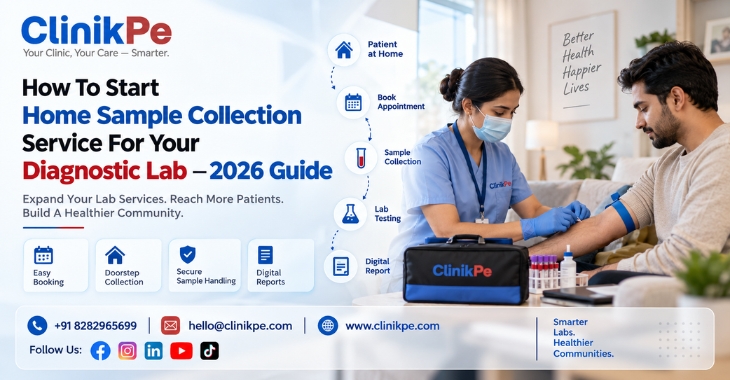
Home sample collection is now expected, not optional. Labs in urban and semi-urban areas that do not offer it are losing patients to chains that do. Here is exactly how to set up a professional home collection service that scales.
Why Home Collection Is Now Essential
Urban patients—particularly elderly, chronically ill, and working professionals—choose labs based on collection convenience as much as price or brand. In metros, 35–40% of diagnostic revenue now comes from home collection. This share is growing as online booking and WhatsApp-based coordination become standard, increasing the need for efficient Lab Management System India solutions to manage bookings and collection workflows.
Chains like Dr. Lal PathLabs, SRL, and Metropolis offer free home collection on bookings above a minimum value. Independent labs that don’t offer home collection can lose patients because of this convenience advantage, regardless of price or quality.
Step 1: Hire and Train Phlebotomists
Start with 1–2 phlebotomists and scale based on booking volume. Minimum qualifications include:
- DMLT (Diploma in Medical Lab Technology) preferred; BMLT for higher-volume labs
- Practical venepuncture experience—test this during the interview
- Polite and presentable, as they represent your lab in patients’ homes
- Smartphone literacy for app-based route management
Train them specifically on cold chain protocol, difficult vein management, paediatric collection, patient communication, and your software app.
Step 2: Equip for Cold Chain Compliance
Standard Home Collection Kit
- Vacutainer tubes (EDTA, plain, fluoride, citrate)
- 21G and 23G needles and holders
- Alcohol swabs and tourniquet
- Insulated cold box with ice packs
- Pre-printed barcode labels
- Urine and stool containers
- Sharps disposal container
- Lab ID badge for the phlebotomist
Temperature-sensitive tests such as CBC, ESR, and hormones must be handled using appropriate cold-chain procedures. Samples left unrefrigerated for extended periods may be compromised, so maintaining the cold chain is essential.
Step 3: Set Up Booking and Route Management
Manual booking through phone calls can lead to missed appointments, incorrect addresses, and inefficient routes. A more organised approach includes:
- WhatsApp booking: Patients send their name, address, required tests, and preferred time.
- Online booking form: Available through your Google Business Profile or website.
- Lab software app: Assigns visits to phlebotomists, supports route management, and allows barcode scanning at the patient’s home.
- Defined time slots: 6am–9am for early morning fasting collections, 9am–12pm for general collections, and 5pm–7pm for post-office-hour visits.
Step 4: Pricing for Home Collection
| Model | Visit Charge | Best For |
| Free collection | ₹0 (bundled) | High-value orders (₹800+); patient acquisition |
| Flat visit fee | ₹100–150 | Most common for independent labs |
| Distance-based | ₹100 within 3km, ₹200 beyond | Suburban coverage expansion |
| Early morning premium | +₹50–100 for 5–7am | Fasting tests where timing is critical |
GPS-Tracked Home Collection with ClinikPe
A professional home collection workflow can include phlebotomist tracking, barcode scanning at the collection point, automatic sample-to-report linking, and WhatsApp report delivery after processing is complete.
See Collection Feature →
Frequently Asked Questions
In most states, if your lab is registered under CEA and the phlebotomist collects samples on behalf of the registered lab, no additional license may be required specifically for home collection. However, the phlebotomist should carry lab identification, and samples must be properly labelled and transported according to applicable biomedical waste requirements. Some states may have additional requirements, so check with your district CMHO.
With optimised route management, a phlebotomist can typically handle 8–12 home visits during the morning collection window from 6am–12pm. Without route optimisation and with manual scheduling, this may drop to 4–7 visits. Efficient route management can therefore significantly improve collection capacity and reduce the cost per collection.
Manage Home Collection Professionally with ClinikPe
GPS tracking, barcode scanning from the collection point, and WhatsApp report delivery can help your lab manage home collection more efficiently from day one.