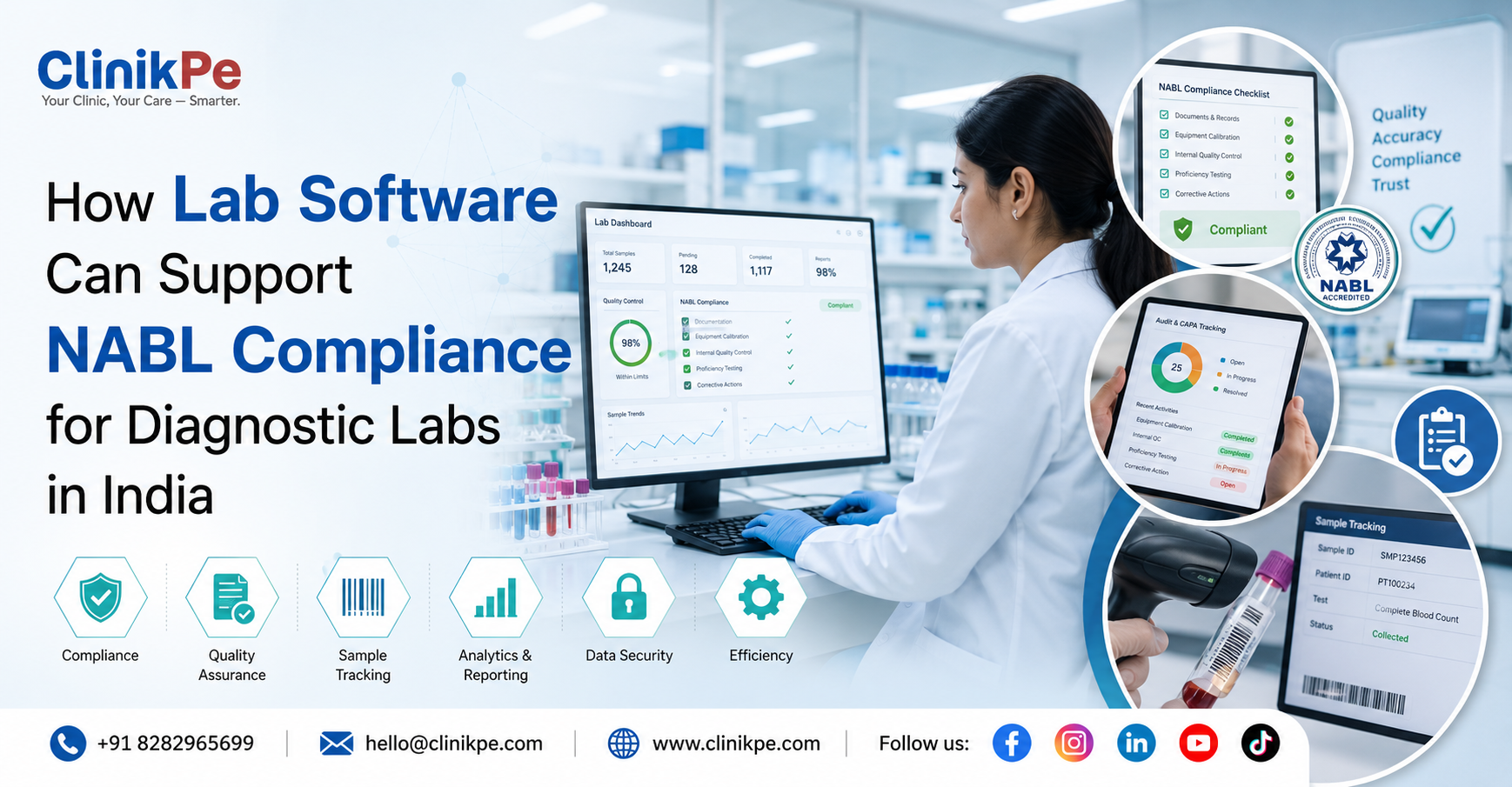
For diagnostic laboratories in India, achieving NABL accreditation is an important milestone that reflects quality, reliability, and standardized testing practices.
The National Accreditation Board for Testing and Calibration Laboratories (NABL) provides accreditation based on international standards such as ISO 15189, which focus on laboratory quality management and technical competence.
For many diagnostic labs, preparing for NABL accreditation can be a complex process. Labs must maintain proper documentation, ensure traceability of samples, standardize operational procedures, and maintain consistent record keeping.
When labs rely heavily on manual registers or fragmented spreadsheets, managing these requirements can become challenging. Maintaining accurate documentation and retrieving historical records during audits often requires significant time and effort.
This is why many diagnostic labs adopt digital lab management systems to help organize operational data and maintain structured workflows.
While software alone does not guarantee NABL accreditation, digital systems can support labs by improving documentation practices, workflow tracking, and operational consistency.
The Problem Explained:
Preparing for NABL accreditation requires labs to maintain detailed documentation across several operational areas.
Typical requirements include:-
- maintaining patient and sample records
- documenting testing workflows
- tracking quality control procedures
- maintaining equipment calibration records
- ensuring traceability of samples and reports
In manual lab environments, managing this level of documentation can be difficult.
Common challenges include:-
- missing historical records
- inconsistent documentation formats
- difficulty retrieving records during audits
- manual errors in documentation
- lack of centralized data storage
For example, if an auditor requests previous sample records or quality control logs, staff may need to search through multiple registers or spreadsheets to locate the information. These inefficiencies make audit preparation more difficult.
Why This Happens in Indian Labs/Clinics:
Several operational factors contribute to documentation challenges during NABL preparation.
Manual record management:
Many labs maintain multiple paper registers for different operational processes.
Fragmented operational data:
Patient records, sample logs, and quality documentation may be stored in separate systems.
Lack of standardized workflows:
Without structured workflows, documentation practices may vary between staff members.
Difficulty maintaining traceability:
Tracking sample history across different stages of testing becomes difficult without centralized systems. These challenges often become visible when labs begin preparing for accreditation audits.
Practical Solutions:
Labs preparing for NABL accreditation can improve documentation and workflow management by implementing structured systems.
1. Standardize documentation processes:
Labs should maintain consistent formats for:-
- patient records
- test reports
- sample tracking logs
This helps maintain clear operational records.
2. Maintain centralized data records:
Centralized data systems make it easier to retrieve historical information when needed.
3. Track sample traceability:
Each sample should be linked to a clear record showing its progress through the testing workflow.
4. Maintain equipment and quality records:
Labs should maintain organized documentation for:-
- equipment calibration
- quality control procedures
- maintenance records
Prepare documentation for audits:
Maintaining structured records helps labs respond quickly during accreditation audits.
Technology’s Role:
Digital Lab Management Systems (LIMS) help labs organize operational data and maintain structured workflows.
Typical capabilities include:-
- patient registration records
- sample tracking systems
- digital report generation
- centralized operational databases
- workflow documentation
These features help labs maintain more consistent operational records. Digital systems also make it easier to retrieve historical data when needed for internal reviews or audits. You can [Explore our Lab Management System] to see how digital systems help labs manage workflows more efficiently.
You may also want to read [How Cloud LIMS Improves Lab Efficiency] to understand how digital infrastructure supports lab operations.
Implementation Tips:
Labs planning to prepare for NABL accreditation can improve operational readiness through structured processes.
Implementation Checklist:-
✔ Standardize documentation formats
✔ Maintain centralized digital records
✔ Implement structured sample tracking
✔ Maintain equipment calibration logs
✔ Train staff on documentation practices
✔ Conduct periodic internal audits
✔ Use digital systems to maintain organized records
These practices help labs maintain operational consistency and improve audit readiness. If you’re evaluating digital lab systems, you can also [View Lab Management System Pricing].
Final Takeaway
NABL accreditation requires diagnostic labs to maintain consistent documentation, standardized workflows, and clear operational traceability. Managing these requirements through manual systems can be challenging, especially as labs grow and test volumes increase.
While software alone does not guarantee NABL accreditation, digital lab management systems can support labs by organizing records, improving workflow tracking, and maintaining structured operational data.
For labs planning long-term growth and quality improvement, implementing structured digital systems can make it easier to maintain operational consistency and prepare for future accreditation goals.
Explore our Lab Management System
FAQ Section
NABL accreditation is a certification provided by the National Accreditation Board for Testing and Calibration Laboratories that confirms a lab meets quality and technical standards.
NABL accreditation is not mandatory for all labs, but it improves credibility and trust among doctors and patients.
No. Lab software does not guarantee accreditation but helps maintain documentation and operational records required for audits.
LIMS systems help maintain organized records, track sample workflows, and centralize documentation.
Typical documentation includes patient records, sample logs, quality control data, equipment calibration records, and operational procedures.