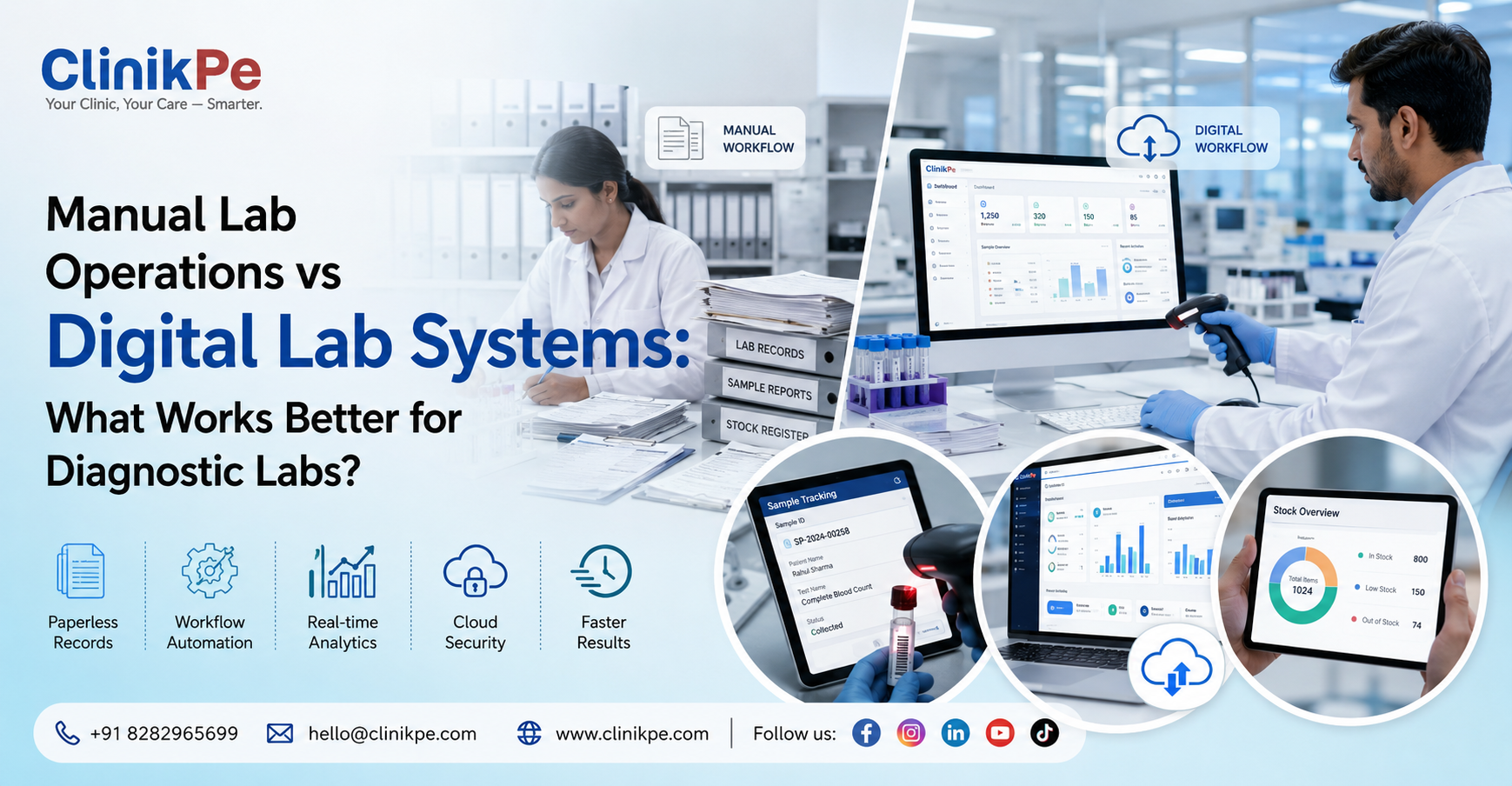
Many diagnostic labs in India still manage daily operations using manual registers, spreadsheets, and paper-based records. These methods have been used for years and are familiar to many lab technicians and administrative staff.
However, as diagnostic labs grow and test volumes increase, manual processes often become difficult to manage. Tasks such as patient registration, sample tracking, report preparation, and billing require multiple steps and careful coordination between staff members.
Even small inefficiencies in these workflows can slow down lab operations. Delayed reports, misplaced sample records, and billing inconsistencies are common challenges when labs rely heavily on manual systems.
To address these issues, many labs are now adopting digital lab management systems designed specifically for diagnostic workflows. Digital systems help automate administrative tasks, improve sample tracking, and provide better visibility into lab operations.
Understanding the differences between manual lab operations and digital lab systems can help diagnostic labs make better decisions about improving efficiency and scaling their services.
The Problem Explained:
Manual lab operations involve managing lab workflows using tools such as:-
- paper registers for patient records
- spreadsheets for test tracking
- handwritten reports
- separate billing records
While these systems may work for labs with very low daily test volumes, they become increasingly inefficient as operations grow.
Common operational issues include:-
- time spent searching patient records
- difficulty tracking sample status
- manual report preparation
- errors in data entry
- delays in report delivery
For example, when sample information is recorded manually, lab staff may need to check multiple registers or spreadsheets to find the status of a specific test.
These delays may appear small individually, but across dozens of patients, they can significantly affect workflow efficiency.
Why This Happens in Indian Labs/Clinics:
There are several reasons why manual lab systems remain common in many diagnostic labs.
Low initial setup cost:
Manual systems do not require software investment, making them appealing for new labs.
Familiarity with traditional workflows:
Many lab technicians and administrative staff are accustomed to paper-based record keeping.
Gradual increase in test volumes:
A lab that initially handles 20 tests per day may eventually process 150 tests daily, but the operational system often remains unchanged.
Lack of awareness about digital solutions:
Some lab owners are not fully aware of how digital lab management systems improve workflow efficiency. As test volumes grow, manual processes often struggle to keep up with increasing operational complexity.
Practical Solutions:
Labs that want to improve efficiency can gradually transition from manual systems to digital workflows.
Digitize patient registration:
Digital systems allow labs to store patient records in a centralized database, making information easier to retrieve.
Implement digital sample tracking:
Each sample can be assigned a unique identifier, allowing staff to monitor its status throughout the testing process.
Automate report generation:
Digital systems can generate reports automatically based on test results, reducing manual formatting work.
Integrate billing systems:
Combining billing with patient records reduces reconciliation errors and administrative workload.
Maintain centralized operational data:
Centralized data helps lab managers track workflow performance and identify operational bottlenecks.
Technology’s Role:
Digital lab systems, commonly known as Laboratory Information Management Systems (LIMS), are designed to streamline diagnostic lab operations.
Typical features include:-
- patient registration
- sample tracking
- automated report generation
- billing integration
- referral management
- operational analytics
These systems help reduce manual workload and improve workflow transparency. Cloud-based platforms also allow lab owners to monitor operations remotely and manage higher patient volumes efficiently.
You can [Explore our Lab Management System] to understand how digital tools support diagnostic lab workflows. You may also want to read [LIMS vs Excel for Lab Management] for a detailed comparison of spreadsheet-based systems and lab software.
Implementation Tips:
Labs planning to transition from manual systems to digital workflows can follow a structured approach.
Implementation Checklist:-
✔ Review current lab workflows
✔ Identify manual operational bottlenecks
✔ Introduce digital patient registration
✔ Implement sample tracking systems
✔ Automate report generation
✔ Train staff on digital workflows
✔ Monitor operational improvements regularly
Gradual implementation helps ensure a smooth transition without disrupting daily operations. If you’re evaluating digital lab software, you can also [View Lab Management System Pricing].
Final Takeaway:
Manual lab operations may work for small labs in the early stages, but they often create inefficiencies as patient volumes increase. Digital lab management systems help labs automate workflows, reduce administrative workload, and improve report turnaround time.
For diagnostic labs looking to scale their operations and compete with larger diagnostic chains, adopting digital infrastructure can significantly improve efficiency. By transitioning from manual systems to structured digital workflows, labs can provide faster and more reliable diagnostic services.
Explore our Lab Management System
FAQ Section
Manual lab operations involve managing patient records, sample tracking, and reports using paper registers or spreadsheets.
A digital lab system or LIMS is software that automates lab workflows, including patient registration, sample tracking, and reporting.
Digital systems reduce administrative workload, improve sample tracking, and help labs deliver reports faster.
Yes. Many LIMS platforms are designed specifically for small and mid-sized labs.
Yes. Automated reporting and streamlined workflows help labs deliver results more quickly.