Sample tracking is one of the most critical operational processes in diagnostic laboratories. Every day, labs handle multiple patient samples that move through several stages, including registration, testing, validation, and report generation. Efficient tracking ensures that each sample is correctly identified and processed on time.
Platforms like ClinikPe help laboratories simplify and manage the entire sample tracking process, reducing errors and improving workflow efficiency.
In small and mid-sized diagnostic labs across India, sample tracking is often managed using manual registers, spreadsheets, or handwritten labels. While these systems may work in the early stages of a lab’s operations, they can become difficult to manage as test volumes increase.
Even a small tracking mistake can create operational confusion. Staff may spend extra time locating samples, identifying test status, or confirming whether results have been processed. In some cases, delays in sample tracking can lead to report turnaround delays or repeated testing.
As diagnostic labs continue to grow, efficient sample tracking becomes essential for maintaining accuracy and operational efficiency. This is why many labs are gradually adopting structured workflows and digital lab management systems that provide better visibility into sample movement and testing status.
The Problem Explained
Sample tracking involves monitoring the progress of each sample from the moment it enters the lab until the final report is generated.
In manual lab environments, this process often involves several steps:-
- Recording patient details in registers
- Labeling sample containers manually
- Updating spreadsheets for test status
- Tracking results across multiple systems
These fragmented processes can create several operational problems.
Common issues include:-
- misplaced samples
- unclear test status
- delays in locating specific samples
- manual recording errors
- inconsistent documentation
For example, when a patient calls to ask about report status, staff may need to check multiple registers or spreadsheets to determine whether the sample has been processed. These delays affect both operational efficiency and patient experience.
Why This Happens in Indian Labs/Clinics:
There are several reasons why sample tracking challenges occur in many diagnostic labs.
Manual labeling systems:
Many labs still rely on handwritten labels and manual sample entries, which can lead to identification errors.
Increasing test volumes:
As patient numbers increase, managing samples manually becomes more complex and time-consuming.
Lack of centralized data:
When sample data is stored in different registers or spreadsheets, tracking sample status becomes difficult.
Limited workflow visibility:
Lab managers may not have real-time insights into where samples are in the testing process. These operational gaps can lead to delays, confusion, and increased workload for lab staff.
Practical Solutions:
Diagnostic labs can improve sample tracking by implementing structured operational practices.
Use standardized sample labeling:
Each sample should have a unique identifier that links it to the patient record and test details. This reduces the risk of misidentification.
Maintain structured sample logs:
Labs should maintain consistent logs that record:-
- sample collection time
- test allocation
- processing status
- report completion
This improves traceability.
Implement clear workflow stages:
Defining clear workflow stages helps staff understand the status of each sample.
Typical stages include:-
- sample received
- sample processed
- results validated
- report generated
Reduce manual data duplication:
Avoid entering the same sample information in multiple registers or spreadsheets. Centralized systems reduce confusion and errors.
Monitor sample turnaround time:
Labs should track how long samples take to move through each workflow stage. This helps identify operational bottlenecks.
Technology’s Role:
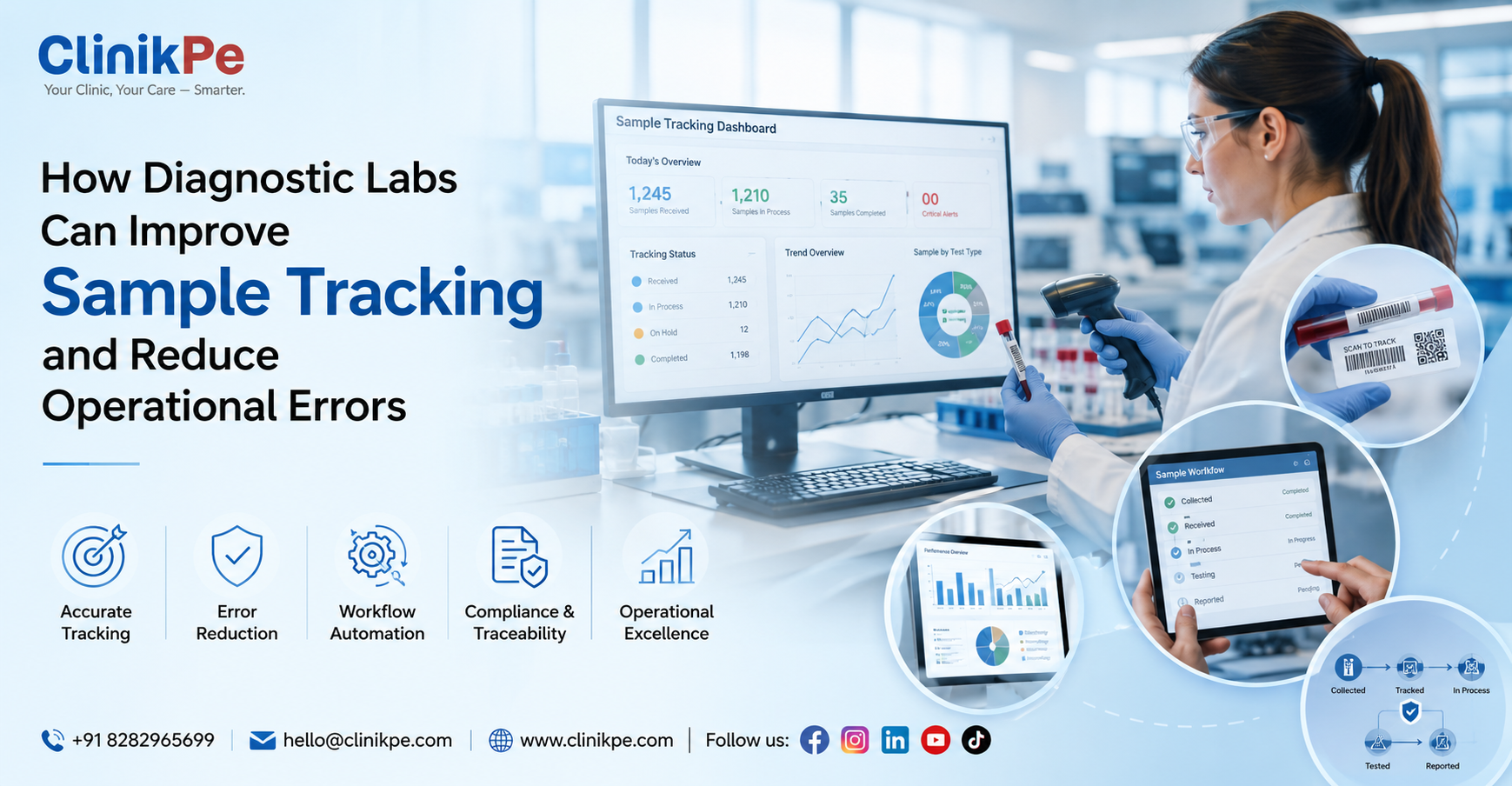
Technology can significantly improve the accuracy and efficiency of sample tracking. A Lab Management System (LIMS) allows labs to track samples digitally throughout the testing workflow.
Typical capabilities include:-
- barcode-based sample tracking
- automated workflow updates
- digital test allocation
- report generation
- real-time sample status monitoring
These systems help lab staff quickly identify where each sample is within the testing process. Digital systems also reduce administrative workload and improve operational transparency. You can [Explore our Lab Management System] to understand how digital tools improve lab workflows.
You may also want to read [Manual Lab Operations vs Digital Lab Systems] to understand how digital systems improve diagnostic lab efficiency.
Implementation Tips:
Labs can gradually improve sample tracking by following a structured approach.
Implementation Checklist:-
✔ Standardize sample labeling procedures
✔ Maintain centralized sample logs
✔ Define clear workflow stages for testing
✔ Train staff on sample handling protocols
✔ Introduce barcode-based tracking where possible
✔ Monitor report turnaround time regularly
✔ Implement scalable lab management systems
These steps help labs maintain accurate records while improving workflow efficiency. If you’re evaluating digital lab tools, you can also [View Lab Management System Pricing].
Final Takeaway:
Accurate sample tracking is essential for maintaining the reliability and efficiency of diagnostic labs. Manual tracking systems may work for smaller labs initially, but they often create operational challenges as test volumes grow.
By implementing structured workflows and adopting digital tracking systems, labs can improve accuracy, reduce operational errors, and deliver reports more efficiently. As the diagnostic industry continues to grow in India, labs that invest in efficient sample tracking systems will be better positioned to deliver reliable and timely diagnostic services.
Explore our Lab Management System
FAQ Section
Sample tracking ensures that each patient sample moves through the testing process accurately and efficiently.
Common problems include misplaced samples, unclear test status, and delays in report generation.
Labs can improve tracking by using standardized labeling, structured workflows, and digital lab management systems.
Barcode tracking assigns a unique barcode to each sample, allowing labs to track it digitally through the testing process.
Yes. LIMS systems provide real-time sample tracking and workflow automation, reducing manual errors.